
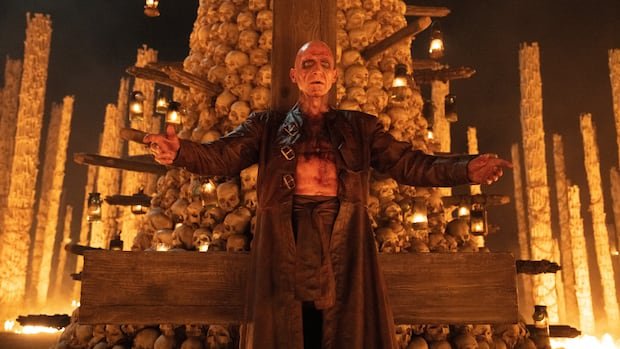
There are similarities to Nia DaCosta’s film “28 Years Later: The Bone Temple” that resonate throughout various historical events. For instance, the swift transformation of the first two European settlers in Australia into a brutal group of torturers after becoming stranded, led by a charismatic figure who incentivized violence and plunder. Similarly, in 1941, two individuals on Belcher Island claimed divine authority to orchestrate violent acts, showcasing how communal systems can devolve into cruelty.
DaCosta’s sequel to the zombie-apocalypse film “28 Years Later” delves into the theme of the corruption of communal structures for malevolent purposes. “The Bone Temple” presents a graphic portrayal of sadism, gore, and religious fanaticism, which may prove challenging for some viewers. However, for those who can handle it, the film offers not only intense action and exceptional performances but also a profound commentary on the origins of systematic cruelty and strategies to combat it.
To fully grasp DaCosta’s narrative, viewers should be familiar with the events of the preceding film. Set in a world plagued by a virus that turns people into cannibals, the surviving uninfected individuals have formed isolated communities. The focus shifts to a group led by the charismatic cult leader Sir Jimmy Crystal, known for his violent rituals and manipulative tactics.
The film explores the dynamics of power and belief within the group, questioning the leader’s motives and the impact of violence on individuals. While the previous film centered on a coming-of-age story, “The Bone Temple” emphasizes the horrors of war through a more nuanced lens, portraying characters like Dr. Kelson and Samson in a more profound light.
The narrative delves into themes of manipulation, belief systems, and the allure of violence, with the character of Sir Jimmy Crystal embodying a twisted interpretation of religious symbolism. Through intricate storytelling and compelling character arcs, the film reflects on the perversion of noble intentions and the consequences of blind allegiance to destructive ideologies.
Despite its grim tone, “The Bone Temple” offers a glimmer of hope by highlighting the importance of resisting oppressive systems and preserving one’s humanity in the face of adversity. In a surprising twist, the film conveys a timely message about the dangers of blind obedience and the enduring power of resilience in the face of darkness.