
Ontario’s plan for a comprehensive electric vehicle (EV) supply chain, previously a major initiative under Premier Doug Ford, is facing challenges as manufacturers postpone or cancel projects. In response, the government is now turning to alternative battery demands to sustain the vision.
Initially, Ford and the federal government collaborated to attract three EV battery plants to Ontario, with investments amounting to billions of dollars. The aim was not only to incorporate these batteries into locally manufactured EVs but also to utilize components sourced and processed within the province.
However, several setbacks have emerged since the proposal’s inception. Honda, scheduled to construct an EV battery plant and assemble electric vehicles in Alliston, delayed the project citing reduced demand. Umicore halted its plans for a cathode plant in eastern Ontario, while General Motors ceased production of its BrightDrop electric delivery van in Ingersoll. Ford also postponed its plans for manufacturing electric vehicles in Oakville in favor of continuing production of gas-powered F-Series pickup trucks.
The premier expressed concerns over a new trade agreement between Canada and China, which will significantly reduce tariffs on Chinese EVs in exchange for China eliminating tariffs on canola. Despite potential threats to the local auto industry, some experts believe that increased access to affordable Chinese EVs could stimulate overall demand for green vehicles and bolster the domestic market in the long run.
Although global demand for EVs is on the rise, challenges in Canada, such as uncertainties surrounding rebates and federal EV sales mandates, along with trade complexities with the U.S., are dampening investor confidence. Stellantis, however, is adapting to the changing landscape by repurposing its NextStar Energy facility in Windsor to produce batteries for energy storage.
According to NextStar CEO Danies Lee, while the demand for EVs may return, the immediate focus is on batteries for storage and other applications like AI-powered devices. Minister of Economic Development Vic Fedeli emphasized the importance of sustaining the end-to-end EV supply chain by supporting alternative battery applications, such as energy storage.
The government’s approach is to encourage companies to establish operations in Ontario without intervening to boost the EV market artificially. Fedeli highlighted the significance of job creation, stating that the specific product being manufactured is secondary to the employment opportunities generated.
Despite the current challenges, industry experts remain optimistic about the future demand for EVs. Joanna Kyriazis, director of policy and strategy at a clean energy think tank, emphasized the global upward trend in EV sales and its potential impact on North America. Sam Fiorani, vice-president of global vehicle forecasting at AutoForecast Solutions, acknowledged the slow growth in EV demand but highlighted the potential for battery and stationary storage as short-term solutions.
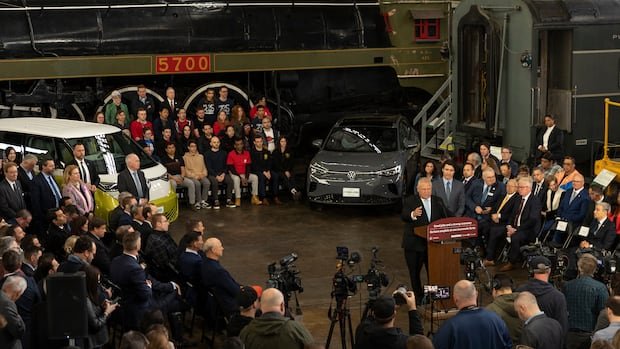
Even as Volkswagen progresses with its PowerCo battery plant in St. Thomas, the company is considering producing batteries for both vehicles and stationary energy storage. The evolving demands for battery storage technology present a strategic opportunity for Ontario’s economic development, according to experts.
In conclusion, the shift towards alternative battery applications in Ontario’s EV supply chain signifies a strategic response to current market challenges, aiming to position the province for long-term sustainability and growth.