
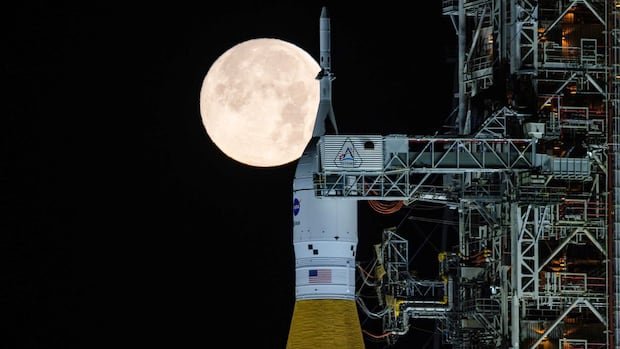
NASA has announced that March is now the earliest possible timeframe for the launch of the Artemis II mission. This decision comes after a liquid hydrogen leak was discovered during a “wet dress rehearsal” this week, delaying the initial target launch date of February 8. The mission aims to send four astronauts on a 10-day lunar orbit journey.
The upcoming launch window is set to open on March 6 and close on March 11. According to NASA, specific launch opportunities are determined each month based on intricate orbital calculations considering Earth’s rotation and the moon’s orbit around the Earth.
During the rehearsal, the rocket was being loaded with hydrogen when the leak was detected. NASA engineers spent several hours troubleshooting the issue around the hydrogen flow interface into the rocket’s core stage. Challenges also arose with a valve and ground audio interruptions, causing delays in operations. Despite these setbacks, the team managed to complete hydrogen tanking and gather valuable data for future missions.
Notably, NASA remains optimistic that the rocket issues can be resolved without relocating it from the launchpad, a process that is time-consuming and complex. Wet dress rehearsals like this one are crucial for identifying and addressing potential issues before the actual launch, ensuring the highest probability of success and prioritizing safety.
The four astronauts, including Canadian Space Agency astronaut Jeremy Hansen and NASA astronauts Reid Wiseman, Victor Glover, and Christina Koch, were released from quarantine following the schedule change. They will re-enter quarantine approximately two weeks before the revised launch opportunity. The Artemis II mission marks the second phase of the Artemis program, focusing on testing critical functions of the capsule to prepare for future crewed lunar missions and establishing a sustained presence on the moon.
NASA will evaluate the data from the recent rehearsal before scheduling the next wet dress rehearsal, as the agency continues its preparations for this historic mission.