
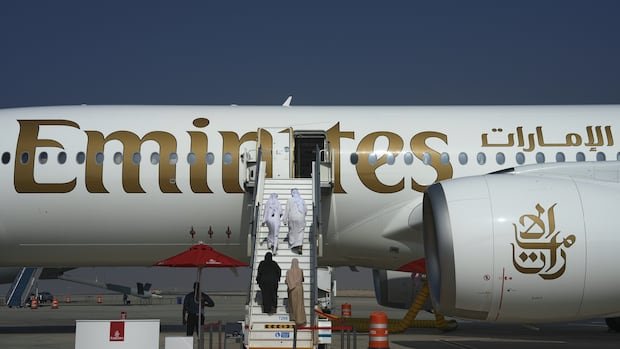
Airlines operating in Canada may face increased demands from passengers to enhance their services as the Canadian government eases restrictions on air travel from the Middle East. Ottawa is lifting constraints on flights originating from Saudi Arabia and the United Arab Emirates following previous diplomatic tensions that had limited air traffic.
Renowned aviation expert John Gradek highlighted that Middle Eastern airlines are globally admired for their exceptional services, putting pressure on Canadian carriers to elevate their offerings to compete effectively. Gradek, a lecturer in aviation management at McGill University, emphasized the need for Canadian airlines like Air Canada, WestJet, and Air Transat to enhance their in-flight services, amenities, and aircraft configurations to stay competitive.
Recent parliamentary committee investigations by Canadian MPs and senators have addressed various challenges faced by the country’s aviation industry, including a lack of competition, high ticket prices, accessibility concerns, and passenger rights issues. Notably, carriers like Emirates have gained online fame for their luxurious first-class accommodations, attracting millions of views showcasing premium services such as caviar meals, sleeping pods, and onboard showers.
In an effort to diversify trade relationships away from the U.S., Prime Minister Mark Carney has been working to strengthen ties with Middle Eastern nations and other global partners. During a visit to the United Arab Emirates, Carney secured a substantial $70 billion commitment for investments in Canada, signaling a shift towards broader international trade engagement.
Transport Minister Steven MacKinnon recently announced an expansion of air transport agreements, allowing for up to 14 passenger flights per week from Saudi Arabia and a maximum of 35 passenger flights per week from the United Arab Emirates, along with unrestricted cargo flights from both countries. This reciprocal arrangement enables Canadian carriers to operate an equivalent number of flights to the Middle East, fostering trade growth and business connections.
Aviation expert Gradek noted that Middle Eastern airlines aspire to achieve an open skies agreement akin to the one Canada has with the United States, aiming for unrestricted market access. He predicted that the new government deal would benefit foreign carriers by facilitating increased transport of Canadian travelers to global hubs like Dubai, enhancing connectivity to destinations across the Indian subcontinent.
Gradek also highlighted the competitive challenge for Canadian airlines to match the premium service standards offered by Middle Eastern carriers at economical prices. While Canadian carriers focus on economy class ticket sales, Middle Eastern airlines generate revenue from premium seats, posing a significant market advantage.
Responding to the evolving landscape, Air Canada emphasized its competitive positioning globally and highlighted existing agreements, such as the extended partnership with Emirates until 2032. Meanwhile, WestJet and Air Transat did not provide comments on the government’s decision to liberalize Canadian air travel regulations.
In a bid to enhance Canada’s global air connectivity, the government further announced expanded flight options between Canada and Albania, underscoring efforts to bolster international travel links.