
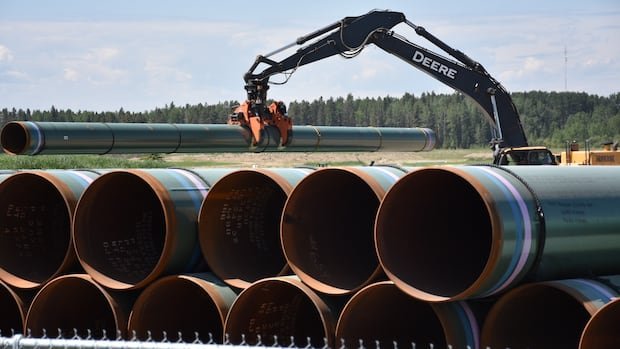
Trans Mountain has initiated its first plan to enhance oil flow in its pipeline system connecting Alberta and British Columbia. The government-owned entity has formally requested approval from the Canada Energy Regulator to introduce drag reducing agents (DRA) to boost oil transportation capacity by up to 10 percent. The estimated cost for this project is $9 million, with construction slated to commence in August this year and potential operational readiness by January 2027, as detailed in the regulatory submission. The original Trans Mountain pipeline, established in the 1950s, was joined by the $34 billion expansion project, facilitating oil transport from Edmonton to the Vancouver region starting in May 2024.
Originally scheduled to explore pipeline capacity enhancements in the later part of this decade, Trans Mountain accelerated its timeline due to rising oil production in Alberta and the anticipated saturation of existing export pipelines in the near future. The implementation of the DRA Project, as specified in the documents, will not lead to a rise in vessel traffic at the Westridge Marine Terminal beyond the previous assessment during the Trans Mountain Expansion Project review process. In addition to the DRA initiative, Trans Mountain is contemplating several other projects to amplify oil transport, including the installation of additional pumping stations that could potentially increase daily oil delivery by 360,000 barrels within the next five years. Presently, the twin pipeline has the capability to transport around 890,000 barrels per day between Alberta and the western coast of British Columbia.
Drag reducing agents, known for minimizing friction within pipelines, offer a cost-effective solution compared to other proposed enhancements for the pipeline network. Various planned expansions to key pipelines, like Trans Mountain, are anticipated to significantly augment the oil export capacity from Western Canada.