
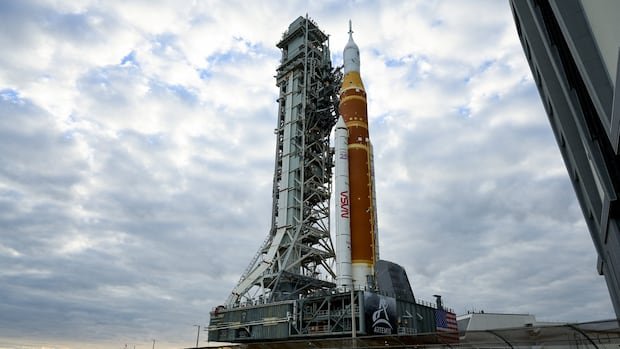
NASA’s latest moon rocket faced another setback over the weekend, likely delaying astronauts’ first lunar mission in decades until the spring. The space agency encountered a new issue with the flow of helium to the rocket’s upper stage, which is crucial for engine purging and fuel tank pressurization. This problem is unrelated to the hydrogen fuel leaks that occurred during a recent countdown rehearsal.
According to Jared Isaacman, the head of NASA, the interruption in the helium flow could be due to a faulty filter, valve, or connection plate. Resolving this issue will require accessing the problematic area in the Vehicle Assembly Building at the Kennedy Space Center in Cape Canaveral, Florida. As a result, preparations for rollback will commence, ruling out the possibility of a March launch. NASA’s next potential launch windows would be in early or late April.
While expressing understanding for the disappointment caused by the delay, Isaacman emphasized the dedication of the NASA team working tirelessly on the mission. The Artemis II lunar fly-around had already been postponed by hydrogen fuel leaks, but a successful second fueling test had instilled confidence for a March liftoff. The astronauts had entered quarantine to ensure their health before the mission.
The helium flow issue specifically affects the SLS rocket’s interim cryogenic propulsion stage, which is vital for positioning the Orion crew capsule in the correct high-altitude orbit around Earth post-launch. Subsequently, the stage is expected to detach from Orion and provide a docking practice target for the astronauts within the capsule, facilitating preparations for future moon missions.
While the Apollo program saw 24 astronauts journey to the moon between 1968 and 1972, the newer Artemis program has only completed one crewless lunar-orbiting mission in 2022. Challenges, including hydrogen fuel leaks, have marred the Artemis missions, delaying crewed moon landings under the program by several years.