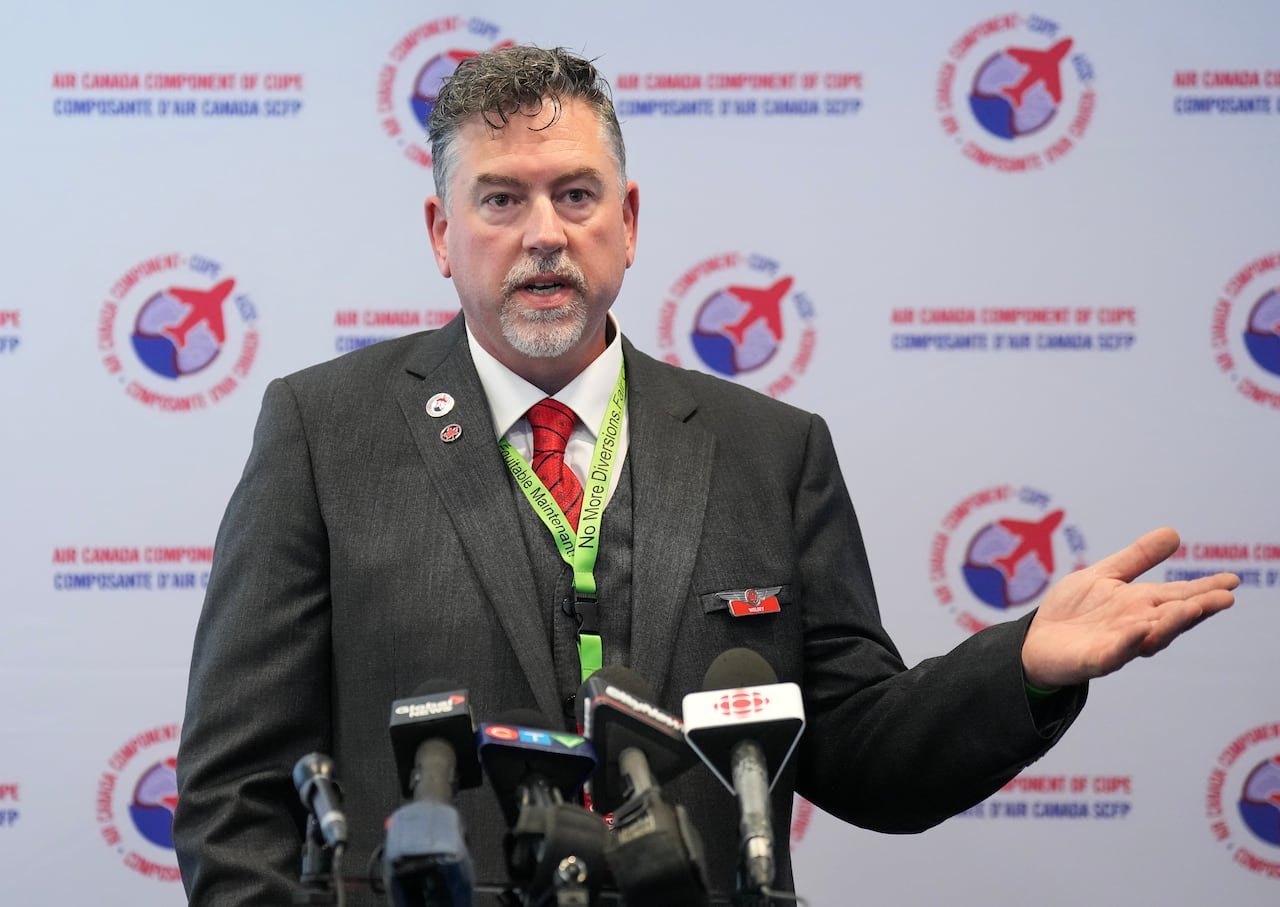
According to Jobs Minister Patty Hajdu, her department requires more details from airlines and unions to address recent claims of unpaid work in the aviation industry.
The federal government released initial findings of an investigation initiated six months ago into allegations raised during negotiations between Air Canada and its flight attendants’ union on Thursday.
In August 2025, over 10,000 Air Canada flight attendants went on strike, causing disruptions for numerous travelers.
The dispute primarily revolved around assertions from the Air Canada unit of the Canadian Union of Public Employees that flight attendants were not being compensated for certain tasks, such as ground duties.
Companies in federally regulated sectors like airlines must pay employees at or above the federal minimum wage.

Hajdu’s department indicated that in the initial phase of the investigation, there was no evidence of compensation practices falling below the federal standards in the aviation sector.
However, the report highlighted that compensation practices for many part-time and entry-level flight attendants required further scrutiny.
In an interview with The Canadian Press, Hajdu mentioned that union members shared instances where they were not fully compensated for flight delays, which could not be verified through payment records.
Hajdu expressed, “That’s not to say it isn’t true. That’s just to say that the records aren’t matching.”
“We requested more detailed data on pay from both the unions and the employer, but we did not receive adequate information to fully determine the validity of the argument,” she added.
CUPE expressed disappointment in a statement, stating that the investigation seemed to conclude that the exploitation of unpaid work by major airlines is not a concern.
Although the Air Canada labor conflict prompted the investigation, it encompassed the entire Canadian airline sector.
Investigators identified a case in a small northern airline where employees seemed to be underpaid, and the employer is cooperating with the department to rectify the issue.
The report noted that the compensation for most flight attendants in the industry follows a “credit-based model.”
Anticipated Meeting with Unions and Airlines Later This Month
Instead of an hourly wage, the credit model factors in flight time, per diems, and additional benefits to determine a flight attendant’s total pay.
Hajdu acknowledged the need to review if this system still functions as intended, highlighting that it has been accepted by most unions and airlines through years of negotiations in Canada.
The head of enforcement and compliance at Hajdu’s department will convene airline and union representatives in Ottawa for a meeting to discuss minimum wage requirements in detail later this month.
The government is urging airlines to conduct self-audits on payment records to ensure compliance with the Labor Code for all flight attendants.
CUPE’s airline division president, Wesley Lesosky, criticized the government for trusting airlines to act responsibly, emphasizing the ongoing issue of unpaid work.