
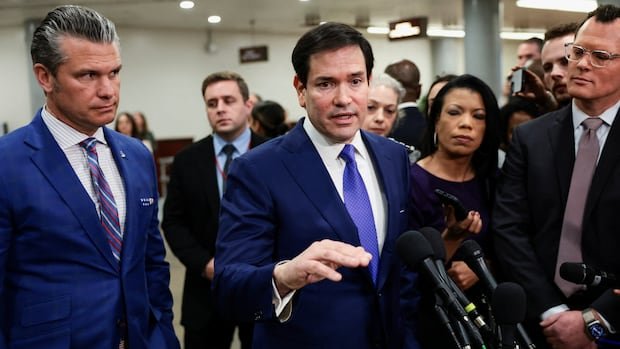
U.S. Secretary of State Marco Rubio announced plans to meet with Danish officials next week following U.S. President Donald Trump’s recent interest in acquiring Greenland. Rubio emphasized diplomatic solutions over military actions, citing the preference for peaceful resolutions, as seen in the case of Venezuela.
Denmark’s Foreign Minister Lars Lokke Rasmussen and Greenland’s Vivian Motzfeldt have requested an urgent meeting with Rubio to address the situation and promote constructive dialogue. The potential military takeover of Greenland by the U.S. could strain the NATO alliance and further widen the gap between Trump and European leaders.
White House Press Secretary Karoline Leavitt stated that Trump and his team are exploring various options regarding Greenland, including the potential use of the U.S. military. Meanwhile, White House adviser Stephen Miller and some congressional Republicans have challenged Denmark’s sovereignty over Greenland.
Republican House Speaker Mike Johnson downplayed the likelihood of military intervention, expressing skepticism about such actions being seriously considered. European governments are coordinating responses in case the U.S. moves forward with its threat to seize Greenland, with widespread support for Greenland’s autonomy from major European nations and Canada.
Trump’s persistent interest in controlling Greenland, justified by its strategic military value and alleged lack of protection by Denmark, has raised concerns and uncertainties. The 1951 agreement between the U.S. and Denmark allows the U.S. certain rights in Greenland for military purposes, but Denmark and Greenland have consistently rejected any sale of the island.
Greenland’s geopolitical significance, situated between Europe and North America, has made it a crucial location for U.S. defence systems and resource exploitation efforts. Trump’s claims of Russian and Chinese presence near Greenland have been contested by Danish officials, as monitoring data shows no such activities in the region.