
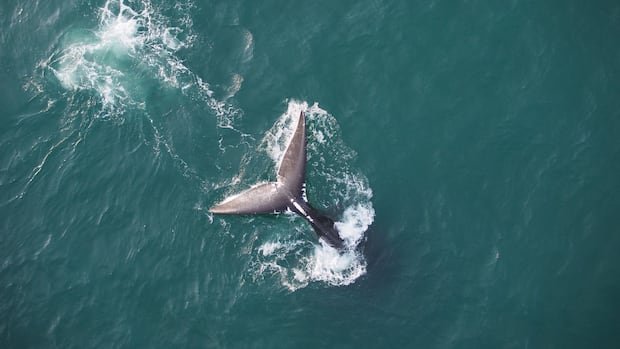
The United States is considering alterations to rules aimed at safeguarding the critically endangered North Atlantic right whale from ship strikes on the East Coast. The National Oceanic and Atmospheric Administration (NOAA) of the country has indicated a potential revision to utilize modern technology to prevent collisions between vessels and whales while meeting industry demands. Neil Jacobs, the NOAA administrator, emphasized the importance of embracing advanced technologies to support American industries and streamline regulations.
To address concerns regarding the speed restrictions introduced for larger vessels in 2008, the agency is soliciting external feedback to mitigate unnecessary regulatory and economic burdens. Despite the proposal, experts caution that current technology is not sufficiently advanced to effectively avert whale collisions. Sean Brillant, the marine program co-ordinator at the Canadian Wildlife Federation, highlighted the need for further advancements in technology to enhance whale detection and collision prevention measures.
Moira Brown, the director of science at the Canadian Whale Institute, mentioned the potential of infrared cameras mounted on ships to detect whales at a distance but noted limitations in their effectiveness. While acknowledging the value of new technologies, Brown stressed the importance of maintaining speed regulations as a crucial conservation measure. A report released by NOAA in 2020 evaluated the impact of speed limit regulations, indicating a reduction in whale mortalities but suggesting the need for enhanced enforcement and broader application of the regulations.
Captain Bob Peacock, a veteran ship pilot in Maine, emphasized the significance of adhering to speed limits and effective communication to prevent whale strikes. Despite the potential changes in regulations, Peacock reiterated his commitment to maintaining a speed of 10 knots. He emphasized the importance of leveraging traditional methods alongside technology for whale detection and collision avoidance.
The North Atlantic right whale population faces threats from entanglement in fishing gear and vessel strikes, contributing to a decline in numbers. With the whale population estimated to be less than 400, conservation efforts remain critical to their survival. The ongoing challenges underscore the importance of balancing regulatory changes with technological advancements to protect these endangered marine species.