
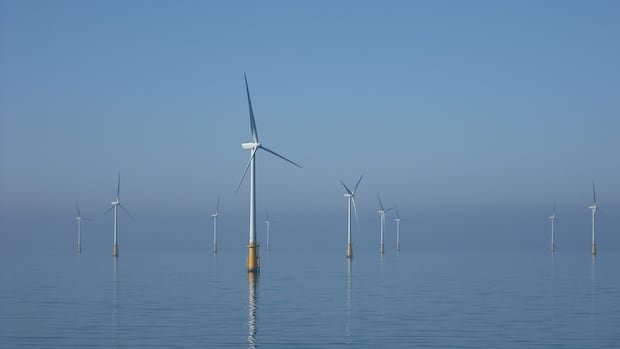
A recent report indicates that Atlantic Canada offers ideal conditions for offshore wind projects, though the actual energy production potential may be lower than anticipated by some officials. The report, conducted by Stantec at the request of the federal government in collaboration with Atlantic provinces and local utilities, highlights the region’s impressive wind speeds and substantial development opportunities. However, challenges such as ocean floor conditions, marine protected areas, ice concerns, shipping routes, and existing fishing zones need careful consideration.
Ericka Wicks, Stantec’s regional sector lead for energy transition and renewable energy, emphasized the various constraints that must be taken into account when planning offshore wind installations. She noted the importance of assessing the economic viability of each project, particularly in terms of transmission costs from turbines to onshore locations.
The report’s findings may temper the ambitious energy goals set forth by Nova Scotia Premier Tim Houston, especially concerning the Wind West project. Stantec’s analysis suggests that the combined renewable energy capacity of the four provinces falls short of the targets proposed for the region.
According to Stantec, Nova Scotia could potentially generate up to nine gigawatts of power by 2050 from existing wind energy areas, starting with fixed-bottom turbines in shallow waters and transitioning to floating platforms in deeper seas. The broader Atlantic Canada region could reach a total capacity of 16.5 gigawatts by 2050 if energy production serves various markets, including hydrogen production and cross-border electricity sales.
While Nova Scotia leads in offshore wind sector development, Newfoundland and Labrador are expected to lag due to deeper waters and other limiting factors. The report suggests that Newfoundland and Labrador could bring online four to five gigawatts by 2050, with an initial installation of about two gigawatts in shallower waters.
Although New Brunswick and Prince Edward Island have shown less enthusiasm for offshore wind projects, the report indicates their potential contributions of two gigawatts and one gigawatt, respectively, by 2050.
The report underscores the significant costs associated with transmission infrastructure, which will be a key consideration for future offshore wind development projects. The study’s third phase will delve into transmission challenges, with funding from Natural Resources Canada and collaboration among provincial governments and industry stakeholders.
Companies eyeing the Wind West initiative anticipate turbine deployment around 2035, citing the lengthy lead time for high-voltage direct current transmission equipment. The report emphasizes the need for further development of transmission systems to accommodate the anticipated energy output from offshore wind projects in the Atlantic region.
Overall, while Atlantic Canada presents vast potential for offshore wind energy, careful planning and investment in infrastructure will be crucial to realizing this potential in the coming decades.