
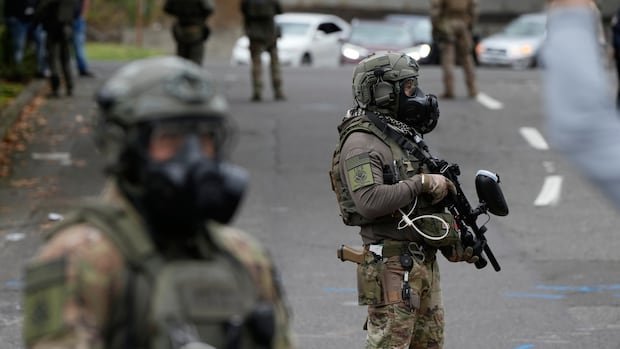
A woman in Minneapolis was fatally shot by a U.S. Immigration and Customs Enforcement (ICE) officer, sparking debate over the agency’s use of force. The victim, Renee Good, a 37-year-old mother of three, was shot in her SUV in a residential area south of downtown Minneapolis on Wednesday. Some officials, including U.S. President Donald Trump, Vice-President JD Vance, and homeland security secretary Kristi Noem, defended the officer’s actions, claiming the woman had used her vehicle as a weapon and had targeted the officer, leading to his act of self-defence. However, Minneapolis Mayor Jacob Frey dismissed this argument as baseless. New York Mayor Zohran Mamdani went as far as labeling the incident as murder.
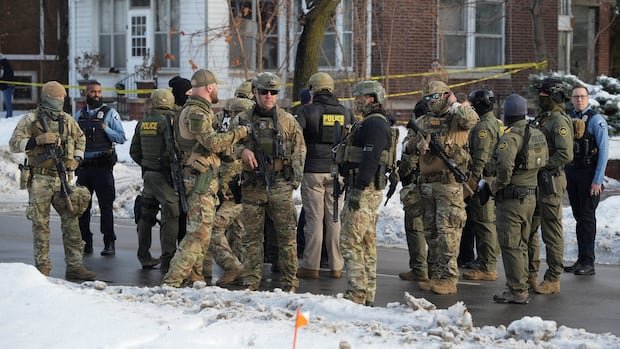
In the latest immigration enforcement action, a woman was shot and killed by an ICE officer in Minneapolis. Host Ian Hanomansing provides insights into the incident.
In a separate incident, U.S. Border Patrol agents shot and injured two individuals in a vehicle outside a hospital in Portland on Thursday. The Department of Homeland Security (DHS) reported that the agents were attempting a “targeted vehicle stop” when the driver tried to run them over.
ICE officers, under DHS jurisdiction, are responsible for enforcing immigration laws, which includes the authority to arrest individuals, using force if necessary, in cases of resistance. However, they must adhere to federal guidelines regarding the appropriate use of force.
Revised Policies Post George Floyd’s Death
Following the killing of George Floyd by police in Minneapolis in 2020, then-President Joe Biden issued an executive order mandating federal law enforcement agencies to update their use-of-force policies to align with or surpass the standards set by the Department of Justice. The DOJ policy, which had been recently revised, dictates that deadly force should only be used when absolutely necessary and when an officer reasonably believes that there is an imminent threat of death or serious injury.
The DOJ policy also prohibits officers from firing at moving vehicles solely to disable them, with exceptions made if the vehicle poses a serious threat by other means, like carrying a firearm. Additionally, officers may shoot at a vehicle if it is being operated in a manner that endangers their lives or the lives of others.
However, the guidelines emphasize that such force should only be used when there are no other reasonable defense options, such as moving out of the vehicle’s path.
John P. Gross, an associate law professor at the University of Wisconsin Law School, highlighted that ICE’s rules prioritize the safety of officers and the public. He noted the potential risks of shooting at a moving vehicle, emphasizing the importance of a safe resolution to such situations.
Regarding the Minneapolis shooting, the vehicle continued moving after the driver was shot until it collided with a parked car.