
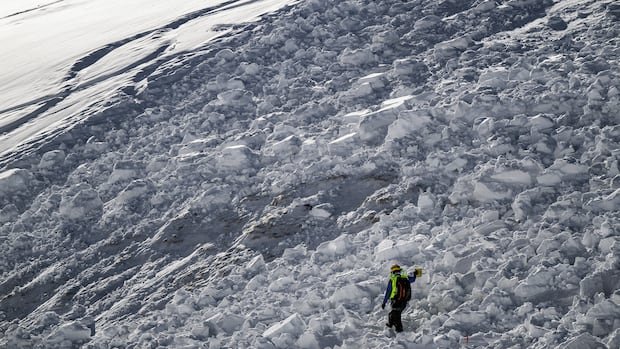
In February, a total of five individuals lost their lives in separate avalanches in British Columbia and Alberta. Simultaneously, California and Utah experienced tragic incidents resulting in the deaths of over a dozen people, with a particularly devastating avalanche claiming the lives of nine individuals. Across Europe, from Andorra to Slovakia, the ongoing season has sadly seen 125 fatalities due to avalanches.
These unfortunate events underscore the persistent dangers associated with backcountry activities, even for experienced and well-prepared individuals. They also shed light on the complexities of predicting when an avalanche might occur.
Three experts interviewed by CBC News provided insights into avalanche formation, prediction challenges, and the potential impact of climate change on avalanche risks.
Avalanches are described as masses of snow in motion at a visible speed, typically descending along sloped terrain. They occur when a strong layer rests atop a weaker layer, requiring a triggering event to initiate the avalanche. The evolution of the snowpack is influenced by various factors such as precipitation and temperature fluctuations, leading to layers with varying stability levels.
Different types of avalanches exist, ranging from loose, less cohesive sluffs to heavy, water-saturated chunks, each with distinct triggers. ‘Slab’ avalanches, characterized by cohesive snow layers breaking off hillsides, are considered particularly hazardous by experts.
Despite advances in understanding avalanche structure and formation, accurately predicting avalanches remains challenging. Each avalanche event is unique, with varying snowpack conditions even over short distances. Forecasting avalanches involves a blend of scientific analysis and interpretation, often relying on historical patterns and weather trends to anticipate potential risks.
The influence of climate change on avalanches is a topic of growing concern. While experts acknowledge a likely impact, determining the precise relationship is complex due to the multitude of factors influencing avalanche occurrences. Changes in snow patterns and stability levels, influenced by rising temperatures, could increase the risk of avalanches. However, the extent of this risk and its implications for backcountry enthusiasts remain subject to ongoing research and analysis.
In addition to staying informed through local forecasts and acquiring proper gear and safety training, individuals venturing into avalanche-prone areas are advised to establish clear safety protocols within their groups. Setting objective rules and fostering effective communication can help mitigate risks and enhance safety during backcountry excursions.