
A renowned feature of trees is their capacity to sequester carbon dioxide, utilizing it for growth. Younger trees, with their rapid growth rate, absorb more carbon compared to mature trees. However, this carbon storage is not permanent, as decaying or burning trees release the stored carbon back into the atmosphere.
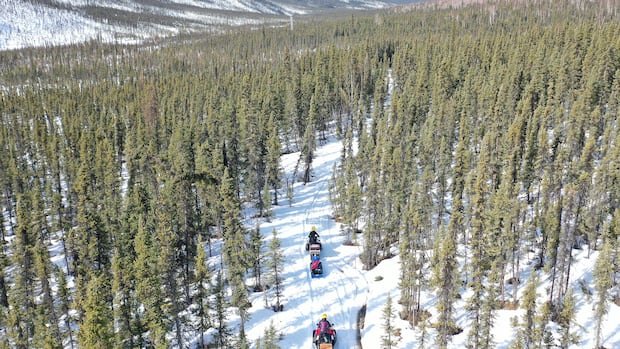
A team of researchers from the UK, Switzerland, and the Czech Republic proposed a unique strategy to submerge mature trees from the expansive boreal forest into the deep Arctic Ocean to secure their carbon for centuries. Their idea involved cutting down specific stands of mature trees in fire-prone areas of Canada, Alaska, and Russia. These trees would then be floated down six Arctic rivers, such as the Yukon and Mackenzie, before being submerged in the Arctic Ocean.
Simultaneously, new fast-growing trees would be planted in place of the removed trees to enhance the absorption of carbon from the atmosphere. The researchers conducted a study, published in the online peer-reviewed journal npj Climate Action, utilizing computer models to assess the impacts of this tree sinking initiative.
The study projected that by implementing this strategy annually in three regions covering 10,000 square kilometers each, equivalent to just 1% of the boreal forest, one gigaton of carbon dioxide could be extracted from the atmosphere every year. However, this amount is relatively small compared to the total global carbon emissions, which were recorded at 37.8 gigatons in 2024 by the International Energy Agency.
Despite the potential benefits of carbon storage, executing such a massive project requires careful consideration of the energy and carbon emissions involved. The process of cutting down trees, transporting them to rivers, floating them to the Arctic Ocean, and sinking them entails significant machinery and energy consumption. Additionally, there are concerns about the impact on marine organisms and the disruption to the forest ecosystem.
Furthermore, there are social considerations, such as the impact on Indigenous communities that rely on these forests for their traditional lifestyle. This proposal is one of many ambitious geoengineering ideas aimed at addressing escalating carbon emissions, reflecting the urgency of finding solutions to combat climate change fundamentally by transitioning away from fossil fuel dependency.
In conclusion, while innovative strategies like sinking trees may offer temporary solutions, the primary focus should be on addressing the root cause of carbon emissions by transitioning to sustainable energy sources like solar, wind, and nuclear power. Embracing clean technologies and reducing reliance on fossil fuels is crucial to combatting climate change effectively and ensuring a sustainable future.