
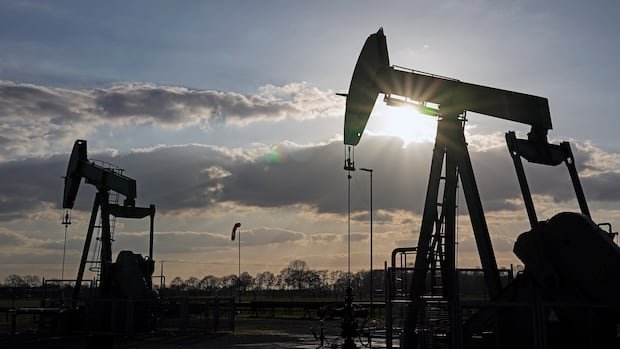
Most U.S. stocks experienced declines on Wednesday as oil prices resumed an upward trend, although the markets maintained a sense of stability with modest movements for a second consecutive day following the tumultuous beginning of the week due to the Middle East conflict. The S&P 500 closed the trading session with a 0.1% decrease, the Dow Jones Industrial Average slipped by 0.6%, while the Nasdaq composite saw a 0.1% increase. Oracle’s robust profit report limited the losses on Wall Street.
Since the commencement of the conflict on February 28, oil prices have been a significant driver of volatility in global financial markets, fluctuating considerably due to developments in the Middle East. This week, oil prices briefly surged to their highest levels since 2022 amid concerns of prolonged production disruptions in the region, sparking fears of increased inflationary pressures on the global economy.
Despite the announcement by the International Energy Agency (IEA) that its members will release a record 400 million barrels of oil from emergency reserves, oil prices inched back up on Wednesday. While this move may temporarily alleviate downward pressure on oil prices, a full restoration of oil and natural gas flow from the Persian Gulf region is anticipated to be the ultimate solution, eagerly awaited by investors worldwide for market stabilization.
“I think it will have a calming effect and it will push prices down simply because, you know, sentiment will be eased, and essentially we will have more oil available on the market,” remarked Naveen Das, an energy analyst at Kpler in London. However, Das cautioned that the released reserves may not fully offset the daily oil loss in the Strait of Hormuz, surpassing the 400 million barrels’ worth from IEA members.
Brent crude, the international benchmark, surged by 4.8% to settle at $91.98 US per barrel, while the benchmark U.S. crude gained 4.6% to settle at $87.25 US per barrel. Concerns are primarily focused on the Strait of Hormuz, a vital passage off Iran’s coast through which a significant portion of global oil trade flows, with U.S. President Donald Trump expressing intent to ensure the strait’s accessibility.
Germany, Austria, and Japan responded to the IEA’s call by announcing plans to release portions of their oil reserves. Germany’s Minister for Economic Affairs and Energy, Katherina Reiche, indicated that following the trigger by the government, there would be a slight delay until the initial quantities are delivered.
The ongoing threat to oil shipments passing through the Strait of Hormuz by Iran has heightened concerns about supply disruptions and potential price instability. Analysts emphasize that while the emergency oil reserves release may provide temporary relief, the sustained disruption in supply flows could lead to further oil price escalation if the conflict prolongs.
Amidst the geopolitical tensions, stock markets have exhibited volatile swings, with the possibility of prolonged high oil prices posing risks to household budgets and corporate expenses. The prospect of “stagflation,” characterized by stagnant growth and persistent inflation, looms over the global economy if oil prices remain elevated for an extended period.
A recent report revealed a 2.4% year-over-year increase in consumer prices for groceries, gasoline, and living expenses in February, indicating persistent inflationary pressures. The Federal Reserve’s two percent inflation target remains elusive, further complicated by the recent surge in gasoline prices due to the ongoing conflict. Consequently, market expectations for Fed interest rate cuts have been delayed, prompting discussions on the potential economic implications of such policy decisions.