
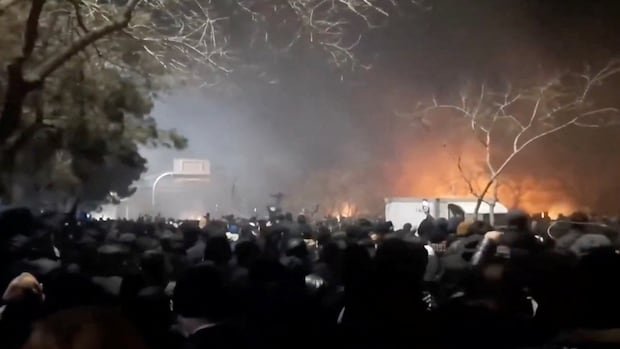
A recent crackdown on nationwide protests in Iran has resulted in the deaths of at least 538 individuals, with fears that the death toll may rise further, activists reported on Sunday. The U.S.-based Human Rights Activists News Agency stated that over 10,600 people have been detained during the two weeks of protests. Among the fatalities, 490 were protesters, and 48 were security forces personnel.
The Iranian government has not disclosed overall casualty figures for the protests, and independent assessment is challenging due to the current internet and international communication restrictions in Iran. Concerns have been raised that the blackout of information could embolden hardliners within Iran’s security apparatus to escalate violence against demonstrators.
U.S. President Donald Trump has expressed support for the protesters, emphasizing the importance of freedom in Iran. Discussions within the White House have explored various potential responses to the situation, including cyberattacks and military actions by the U.S. or Israel. However, no concrete decisions have been made yet.
In a parliamentary speech, Iranian hardliner Mohammad Baagher Qalibaf warned that the U.S. military and Israel would be considered legitimate targets if Iran faces any attacks. The threat was met with chants of “Death to America” by lawmakers in the Iranian parliament. The seriousness of Iran’s intentions to launch a strike remains uncertain, particularly after previous conflicts with Israel.
The U.S. military has reiterated its readiness to defend its interests and allies in the Middle East. Israel is closely monitoring the situation, with Israeli Prime Minister Benjamin Netanyahu discussing the matter with U.S. Secretary of State Marco Rubio. Pope Leo XIV has called for dialogue and peace in Iran amidst the ongoing tensions.
Videos circulated online, possibly transmitted through satellite technology, showed protests in Tehran and Mashhad. The demonstrations in Iran’s capital have been characterized by sporadic gatherings in response to heavy security presence. Mashhad witnessed confrontations between protesters and security forces, with reports of violence and casualties.
President Masoud Pezeshkian acknowledged public concerns but emphasized the need to prevent rioters from causing societal harm. Exiled Crown Prince Reza Pahlavi has urged demonstrators to take to the streets. The support for Pahlavi, including his ties to Israel, has sparked debates regarding the motivations behind the ongoing protests.