
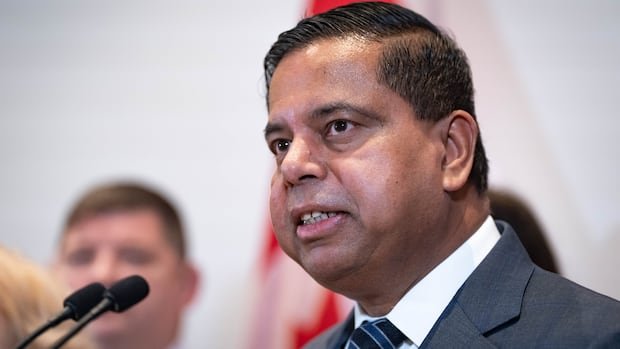
Public Safety Minister Gary Anandasangaree has deemed the trial phase of the government’s key gun control initiative a success, despite its limited adoption. Since 2020, Ottawa has prohibited approximately 2,500 types of firearms, emphasizing that the listed models are designed for combat rather than hunting or sports shooting. The policy has encountered resistance from the Conservatives and pro-firearm groups, who argue that it unfairly targets law-abiding gun owners instead of criminals. In response, the government pledged to repurchase these firearms to compensate owners fairly.
A trial run of the buyback program saw minimal participation. Initially, Ottawa aimed to collect 200 firearms during a six-week trial in Cape Breton, Nova Scotia; however, only 25 firearms were surrendered by 16 individuals. The outcomes, disclosed last week, are prompting concerns about the effectiveness of the over $700 million program when it expands nationwide.
Anandasangaree, in a news briefing on Monday, expressed satisfaction with the overall pilot, emphasizing the assessment of their capacity for firearm registration and recovery from voluntary contributors. He highlighted that the pilot was not solely focused on numerical outcomes and anticipates broader engagement when the full program is launched in the coming weeks.
The Minister’s department refrained from disclosing the specific firearm makes and models returned during the trial. Apart from low participation, the program faces challenges as few provinces and law enforcement bodies have formally endorsed it. Alberta and Saskatchewan, along with their respective premiers, have opposed the program, citing constitutional concerns and financial considerations.
Critics, including political science professor Noah Schwartz, argue that the government is struggling to gain public support for the program. They point to leaked comments by Anandasangaree questioning the program’s efficacy and hinting at personal compensation for gun owners dissatisfied with the government’s payments. The government’s ability to execute the program effectively is being closely monitored by gun control advocates, who stress the importance of curbing gun violence.
Quebec is the first province to support the federal buyback plan, with the RCMP, Quebec provincial police, and several municipal police services participating. The government has not provided an estimate of the expected number of firearms to be collected during the national rollout. The amnesty period for possessing prohibited firearms expires later this year, with owners required to dispose of or deactivate their listed firearms by October 30 to avoid legal consequences.