
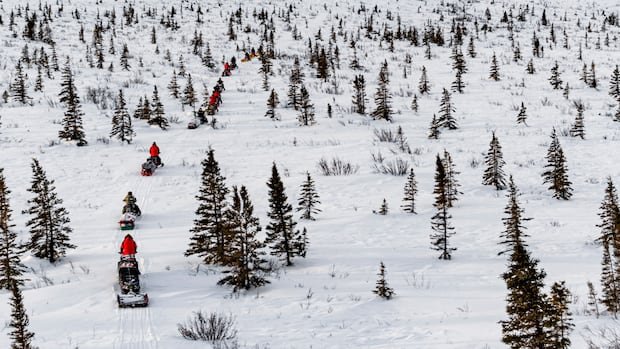
University of Alberta researchers, in collaboration with Canada’s Department of National Defence, have developed a miniature sensor that operates without batteries. This innovative sensor is capable of monitoring vital signs and identifying frostbite in soldiers stationed in freezing conditions. The project, led by Ashwin Iyer from the University of Alberta’s engineering faculty, is part of a long-term endeavor supported by the Department of National Defence’s Innovation for Defence Excellence and Security program.
The primary objective of the initiative is to leverage commercial telecommunications technology for military applications. The University of Alberta boasts cutting-edge research in the development of SWaP-C systems, which prioritize small size, low weight, minimal power usage, and cost-effectiveness.
Iyer discussed the project on CBC’s The Trailbreaker with Shannon Scott, highlighting the sensor’s potential applications beyond military settings. The sensor is designed to operate in extreme cold environments, with the capability to function in temperatures as low as -70 degrees Celsius. Unlike traditional battery-powered devices that struggle in such harsh conditions, these sensors harvest energy from their surroundings, ensuring continuous operation.
The sensors utilize radio frequency identification technology to power themselves, drawing energy from ambient sources like motion or radio waves. By miniaturizing components and leveraging advanced antenna research, the team achieved wireless, compact sensors that can effectively detect frostbite and monitor vital signs in real-time.
Beyond military applications, the sensor technology holds promise for emergency response scenarios and diverse environmental conditions. With the capacity to withstand both extreme cold and high temperatures, these sensors could find utility in various contexts, from home safety monitoring to detecting environmental hazards like flooding or gas leaks. This versatile technology underscores the potential for innovation spurred by military research investments.