
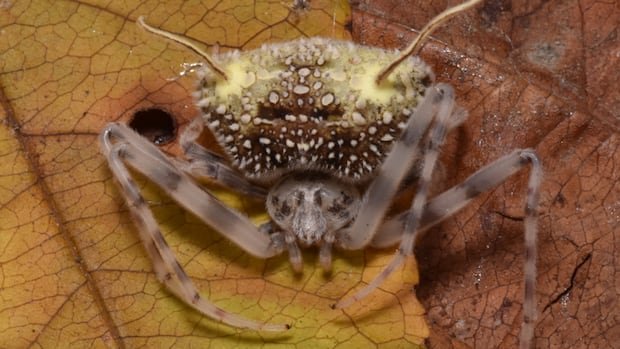
In a surprising discovery during an Amazon rainforest tour in August 2025, scientist Alexander Bentley encountered a spider seemingly covered by a deadly parasitic fungus that was still alive. Familiar with cordyceps fungi from pop culture references, Bentley was initially convinced it was a cordyceps-infected spider that had somehow survived the infection process.
However, further investigation revealed that the spider was a new species that displayed features mimicking fungus like cordyceps. These tubercle-like structures on its abdomen suggested a potential mimicry strategy for prey attraction or predator deterrence, as detailed in a study published in Zootaxa.
Utilizing the iNaturalist platform for insights, Bentley received feedback indicating that the spider could be mimicking a specific parasitic fungus, gibellula, from the Cordycipitaceae family. Collaborating with colleague David Ricardo Díaz-Guevara, Bentley confirmed the spider as a new species named Taczanowskia waska through meticulous morphological analysis.
Experts speculate two possible reasons for the spider’s fungus-like appearance: as an aggressive hunting tactic or a defensive mechanism against predators. While some suggest camouflage purposes, others like Andrew Swafford believe further research is needed to fully understand the spider’s unique features.
This groundbreaking discovery, facilitated by citizen science platforms like iNaturalist, showcases the value of collaborative research efforts. Bentley expressed immense excitement over this rare find, emphasizing its unparalleled uniqueness compared to other discoveries in his rainforest explorations.