
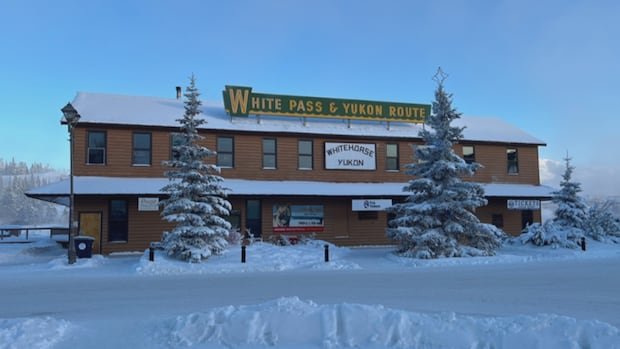
Whitehorse encountered its wettest winter on record this season, receiving over two-and-a-half times the usual amount of precipitation, according to Environment Canada. This was part of a trend of several records being broken during an exceptionally cold and snowy winter in Yukon. The Whitehorse airport recorded 139.8 millimeters of precipitation from December 1 to February 28, significantly higher than the seasonal average of 52.1 millimeters for the same period. Additionally, this winter ranked as the 24th coldest on record for Whitehorse since weather records began in 1941.
Environment Canada Meteorologist Brian Proctor noted that the average temperature during December, January, and February in Whitehorse is typically -13.3°C, but this season the temperature dropped to -16.9°C, marking a deviation of 3.6 degrees below the norm. The meteorological winter period, spanning from December 1 to the end of February, was colder than usual across most of Yukon due to a persistent ridge of Arctic high pressure that settled over the region in December and lingered throughout the season.
While the three-month period did not break overall temperature records, many communities experienced record-breaking low minimum temperatures on specific days. Faro set 13 low minimum temperature records in December, including a low of -45.6°C on December 11, the lowest since 1966. Moreover, Burwash Landing, the Kluane Lake area, Carmacks, Beaver Lake, Teslin, Watson Lake, and Whitehorse broke multiple low minimum temperature records in December.
Some areas also saw above-average precipitation levels, with Dawson ranking as the second wettest on record dating back to 1902, and Watson Lake as the second wettest since 1939. Benoit Turcotte, a senior researcher focusing on hydrology and climate change at Yukon University, analyzed the data and highlighted that Whitehorse experienced 34 consecutive days with temperatures below -20°C, raising concerns about potential property damage from a rapid snowmelt in the spring.
By the end of February, Whitehorse had 77 centimeters of snow on the ground, compared to 49 centimeters on the same date the previous year. Turcotte expressed worry about the impact of a sudden snowmelt on properties and infrastructure in the area.