
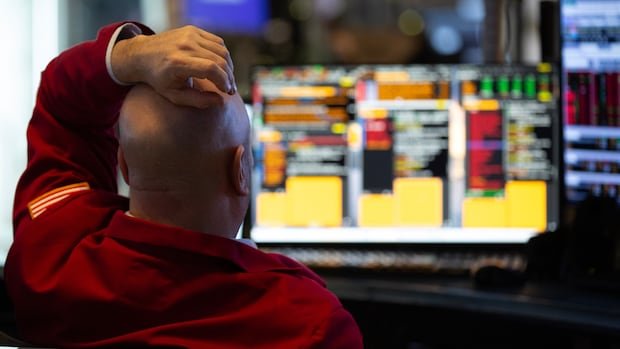
U.S. stocks surged on Monday, erasing previous losses linked to the U.S. and Israel’s conflict with Iran. Wall Street expressed optimism that the global economy could steer clear of a worst-case scenario. The S&P 500 climbed by one percent, moving within 1.3 percent of its record high from earlier this year. The Dow Jones Industrial Average gained 301 points, equivalent to a 0.6 percent increase, while the Nasdaq composite rose by 1.2 percent.
Meanwhile, in Canada, the S&P/TSX composite index saw an increase of 183.48 points, reaching 33,879.24.
Despite oil prices surpassing $100 US per barrel following unsuccessful ceasefire negotiations, prices moderated later in the day. The market saw more tempered fluctuations compared to the volatile swings observed since the conflict began in late February.
After the ceasefire talks collapsed over the weekend, U.S. President Donald Trump proposed a blockade of the Strait of Hormuz. This move would further restrict oil supply globally, as existing shortages were exacerbated by Iran’s limitations on traffic through the crucial strait, a primary route for oil distribution from the Persian Gulf region to international markets. In response, Iran issued threats against all ports in the Persian Gulf and the Gulf of Oman.
The price of Brent crude, the global benchmark, surged by 4.4 percent to settle at $99.36 US, significantly above its pre-war price of around $70 US. Despite this increase, it remained below the peak of $119 US seen during heightened Iran war concerns, retracting from its earlier peak of nearly $104 US on Monday morning.
“Markets are finding some reassurance in the ongoing dialogue between the two parties and the apparent stability of the broader ceasefire at present,” stated Sameer Samana, head of global equities and real assets at Wells Fargo Investment Institute.
Simultaneously, major U.S. corporations are beginning to disclose their first-quarter earnings. Positive financial results could help alleviate concerns on Wall Street related to the Strait of Hormuz, as stock values typically align with long-term corporate profitability trends.
In the bond market, Treasury yields dipped as oil prices retreated from their peak earlier in the day. The 10-year U.S. Treasury yield fell to 4.29 percent from 4.31 percent at the end of the previous trading session.
Across global stock markets, indexes in Europe and Asia experienced declines. Hong Kong’s Hang Seng index dropped by 0.9 percent, while South Korea’s Kospi index also fell by 0.9 percent, reflecting notable losses in these major markets.