
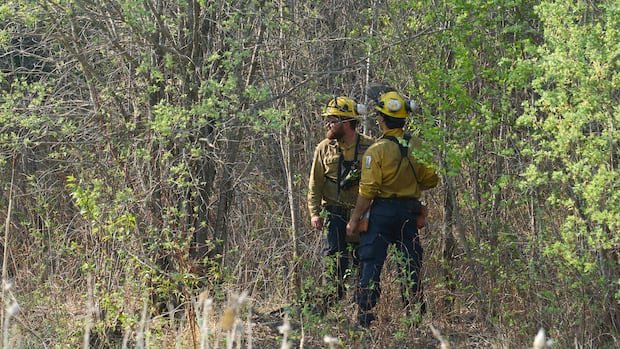
After a wildfire is extinguished, smoke rises from smoldering areas, releasing harmful chemicals into the air that firefighters may inhale for prolonged periods. This phase, described by a former Manitoba wildland firefighter, is noted as the peak of poor air quality during fire suppression efforts.
The firefighter expressed concerns about the impact on health, stating, “At the end of the day, you’re blowing your nose and it is all black.” Despite the risks, they emphasized the commitment to the job amidst such hazards.
With longer and more active wildfire seasons in Canada, experts warn of increased smoke exposure for firefighting crews. Christopher Pascoe, an associate professor at the University of Manitoba specializing in respiratory diseases, advised limiting exposure to harmful gases and particulate matter.
Manitoba employs disposable masks and training to mitigate air pollution risks for firefighters. However, the practical challenges of wearing protective coverings during intense and physically demanding firefighting activities can pose obstacles. Pascoe highlighted the health implications of wildfire smoke exposure, ranging from short-term breathing difficulties to long-term risks of heart and lung diseases, including cancer.
While respirators can offer necessary protection from airborne particles in wildfire smoke, the Manitoba Government and General Employees’ Union raised concerns about the practicality of using bulky face coverings during firefighting operations. The union emphasized the balance between protection and hindrance in an already demanding job.
Despite the availability of N95 masks for firefighters in Manitoba, Pascoe noted limitations in their effectiveness, especially in filtering out hazardous gases. He suggested the need for innovations to enhance respiratory protective equipment for firefighters battling wildfires.
Manitoba Natural Resources Minister Ian Bushie acknowledged the importance of safeguarding firefighting staff from wildfire smoke dangers but highlighted the need to consider the physical implications of wearing masks. While the province aims to provide protective gear, challenges like heat exhaustion and breathing difficulties have been raised by firefighters.
In British Columbia, various strategies are employed to reduce smoke exposure risks for firefighters, including rotating crews in smoky areas, thorough cleanup post-fire, and ensuring clean air spaces for rest. Natasha Broznitsky from the BC Wildfire Service emphasized the multifaceted approach to protecting firefighters from smoke exposure.
As wildfires become more severe, the importance of effective respiratory protection becomes increasingly crucial. Experts stress the need for proactive measures to mitigate the health risks associated with prolonged exposure to wildfire smoke.