
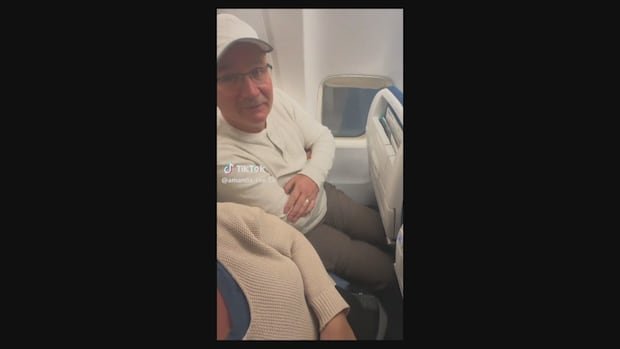
A video that gained popularity on social media showcases a family from Alberta facing a space crunch during a recent flight with WestJet, sparking discussions about legroom for passengers on Canadian airlines and the potential need for government intervention. On December 26, 2025, Amanda Schmidt, accompanied by her parents, Manfred Schmidt, boarded a WestJet flight from Edmonton to Toronto en route to the Dominican Republic. Opting for ultra-basic economy seats that did not recline, the family found themselves in a cramped seating arrangement.
In the viral TikTok video shared by Amanda, her father, Manfred, a 6’3″ tall individual weighing around 220 pounds, visibly struggled to fit comfortably in his seat. Expressing his discomfort, Manfred mentioned, “I could not get into the seat. I mean, I tried to get my knees in front of me … I’m a little bit taller than normal, maybe, but not a lot.” Concerned about the upcoming four-hour flight, he highlighted the challenges of limited mobility and discomfort akin to being packed tightly.
Although flight attendants eventually accommodated Manfred in a seat with more legroom, Amanda emphasized the airline’s accountability in ensuring passenger well-being. Describing the seating experience as “inhumane” and a safety hazard, she stressed the importance of seats being designed to safely accommodate passengers.
In response to the incident, WestJet declined an interview but explained via email that the aircraft featured in the video was part of their newly reconfigured fleet. The airline aims to enhance air travel accessibility by introducing new products like aircraft with altered seat pitch to accommodate an extra row, subsequently reducing legroom for passengers. Some rows on specific WestJet planes offer a 28-inch pitch, approximately 71 centimeters.
Acknowledging customer feedback, WestJet acknowledged on social media that the revised seating layout may not suit everyone and assured attentive consideration of input. Previously, the company paused plans to install non-reclining seats on additional planes following negative reactions.
The Pilots’ union at WestJet expressed discontent with the airline’s changes, emphasizing the importance of safety standards. While the 28-inch seat pitch configuration is Transport Canada-approved, the union believes it compromises safety margins and diminishes the overall guest experience.
Despite the absence of federal regulations concerning legroom in the Canadian airline industry, aviation expert John Gradek from McGill University highlighted the typical 30-inch pitch in the sector. He advocated for government intervention to establish standards for customer service expectations related to seat spacing on flights.
Manfred Schmidt echoed the need for standardized legroom requirements on planes, suggesting that aviation authorities should play a role in defining minimum space standards. Transport Canada affirmed that any interior modifications affecting aircraft safety undergo rigorous assessment and approval processes to ensure compliance with airworthiness standards. WestJet stated that all alterations were executed in adherence to Transport Canada’s stringent safety criteria.