
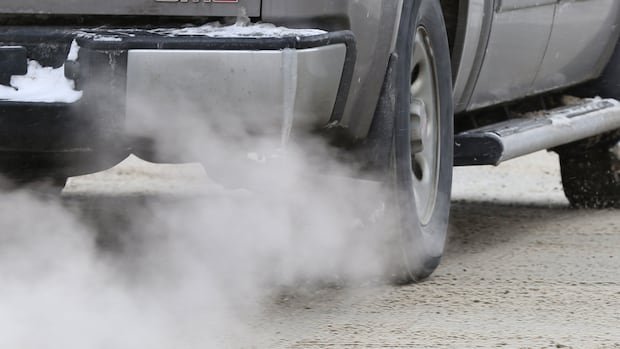
The Yukon government has overturned a law that established goals for reducing greenhouse gas emissions and mandated the territory to track its progress in achieving those objectives. The Clean Energy Act, enacted in 2022 by the previous Liberal administration, aimed to create a legal framework for the Yukon to achieve net-zero emissions by 2050, marking the territory’s inaugural energy and climate change legislation.
Premier Currie Dixon, under the Yukon Party government, recently introduced new legislation to abolish the act, citing the need to lower electricity consumption. Alongside emission reduction objectives, the Clean Energy Act outlined targets for increasing the number of zero-emission vehicles in the Yukon. Dixon expressed concerns about the strain on the territory’s power grid due to these requirements, emphasizing the necessity to curb energy demand growth.
In addition to repealing the act, the government is discontinuing rebate initiatives for electric vehicles (EVs), EV chargers, and e-bikes. These programs previously allowed Yukon residents to apply for rebates of up to $5,000 for certain EVs and hybrid vehicles, and up to $1,500 for specific e-bikes. Dixon justified the elimination of these subsidies as a regrettable but essential measure to address escalating energy demands and prevent potential power shortages.
The government announced plans to redirect the funds allocated for EV rebates towards initiatives aimed at promoting energy-efficient practices among Yukoners without straining the grid. This includes providing incentives for homeowners to install propane or oil-fired furnaces and hot water systems, among other energy-saving solutions.
Opposition Leader Kate White criticized the abrupt repeal of the Clean Energy Act, lamenting the lack of extensive deliberation on the matter. White argued that instead of scrapping the entire legislation, adjustments could have been made to emission targets and other provisions through a collaborative process.
Overall, the government’s decision to rescind the Clean Energy Act has sparked debate and divided opinions among stakeholders, with contrasting views on the best approach to addressing energy demands and environmental sustainability in the Yukon.