
Hundreds of freshly minted medical school graduates, clad in their well-deserved white coats, commence their residencies each summer, embarking on further specialized training in fields like surgery or pediatrics before obtaining their medical licenses. Residencies are renowned for their demanding learning and work settings, where new physicians progress by assuming increasing responsibilities under the mentorship of attending doctors.
Two researchers from the University of Calgary suggest that the structure of these programs can be traced back to William Stewart Halsted, a pivotal figure in modern surgical training in North America, and his struggle with cocaine addiction. Halsted, a trailblazer in surgery, made significant contributions to the field, such as refining the radical mastectomy procedure for breast cancer and introducing surgical gloves.
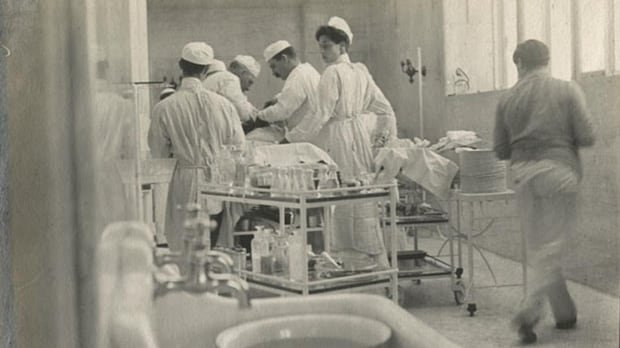
One of Halsted’s notable achievements was the creation of a unique residency training model at Johns Hopkins Hospital in the late 1800s. This program, featuring a hierarchical system where residents were ranked by experience and given escalating duties, may have been devised by Halsted to conceal his addiction and compensate for his declining skills, as per a study in the Canadian Journal of Surgery.
Dr. Norman Schachar, a professor emeritus at the University of Calgary’s Cumming School of Medicine and co-author of the study, noted that Halsted established a system where talented young students unknowingly supported him, with the most skilled individual becoming the senior resident. The program allowed Halsted to maintain high-quality surgical care while minimizing direct patient interactions.
Halsted’s career began in New York, where he experimented with innovative medical procedures, including the use of cocaine as a local anesthetic, which led to his addiction. Despite the setbacks caused by his substance abuse, Halsted’s revised surgical approach focused on meticulous, tissue-preserving techniques that yielded improved outcomes.
Although there is no direct evidence linking Halsted’s addiction to his training model, researchers believe it influenced his emphasis on structured education over traditional apprenticeships. His residency program, characterized by a competitive environment and graded responsibilities, aimed at masking his addiction while producing skilled surgeons dedicated to their mentor.
The enduring impact of Halsted’s training model is evident in modern residency programs, where the concept of graded responsibility remains fundamental. While current programs have evolved to ensure residents complete their training, the core principles of providing round-the-clock patient care and fostering a continuous learning environment have stood the test of time in medical education.