
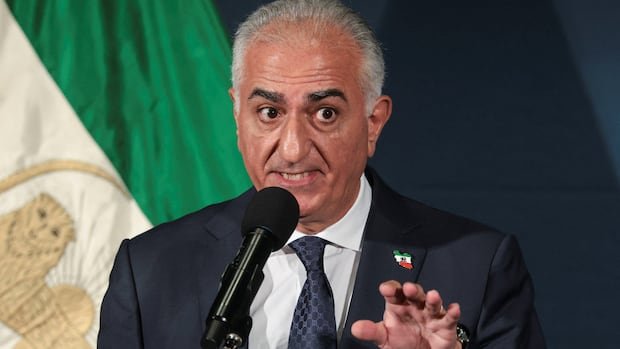
Iranian opposition figure Reza Pahlavi called on the global community to increase pressure on the Iranian government to support protesters in overthrowing clerical rule. Pahlavi, the 65-year-old son of the deposed Iranian shah, spoke at a press conference in Washington, D.C., advocating for political, economic, and military pressure on Tehran.
Acknowledging the recent deadly crackdown that has subdued protests, Pahlavi expressed his willingness to lead a transitional government if needed. He emphasized the critical need for action at this pivotal moment in history, praising the bravery of the protesters challenging the repressive regime.
Pahlavi highlighted the significant challenges faced by the clerical establishment in the face of widespread dissent triggered by economic hardships and inflation. He affirmed his support for the demonstrators, noting his recognition at protests, even in countries like Canada.
The exiled opposition figure asserted that sections of the Iranian military and security forces have shown loyalty to him, positioning him uniquely to facilitate a stable transition in the country. Pahlavi lauded U.S. President Donald Trump for his stance in supporting the protesters and hinted at the potential for a “Cyrus Accords” inspired by Trump’s previous diplomatic achievements.
While Pahlavi’s leadership role in Iran’s transition has been questioned, he reiterated his commitment to democracy, urging the international community to align with the Iranian people in their quest for change. He proposed a comprehensive plan involving measures to target the Iranian Revolutionary Guard leadership, impose economic sanctions, and support internet services to counter government censorship.
As the situation in Iran remains tense, with reports of sporadic unrest, Pahlavi’s calls for international support and the White House’s monitoring of the situation underscore the gravity of the ongoing protests. Amid conflicting narratives and escalating tensions, global leaders, including Russian President Vladimir Putin, have weighed in on the crisis, offering potential mediation and emphasizing the importance of de-escalation in the region.