
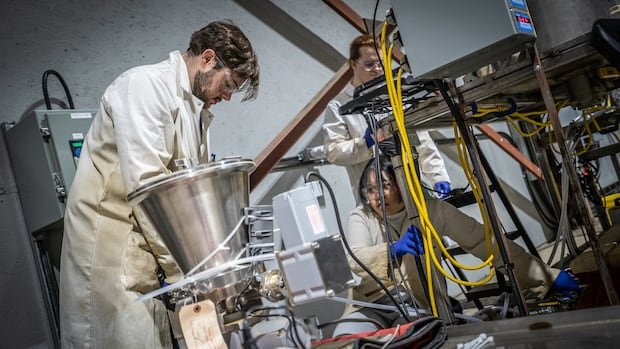
Researchers in Sudbury, Ontario, are engaged in efforts to expand bacteria-powered technology for recovering valuable metals from old mine waste. MIRARCO Mining Innovation is conducting trials at a pilot facility to demonstrate how microbes can break down mine tailings, liberating essential minerals such as nickel, cobalt, and copper through a process called bioleaching. Despite bioleaching being a common practice in global mining operations, with around 30 sites worldwide utilizing the technology, Canada has not yet fully implemented it on a commercial scale, as stated by Nadia Mykytczuk, the CEO of MIRARCO.
During a recent tour of the 10,000-square-foot pilot facility in Sudbury, Mykytczuk and other experts shared insights into the bioleaching process. The facility, operational since May, represents years of research efforts. Mykytczuk highlighted the significant presence of valuable nickel in Sudbury’s tailings, estimating them to be worth billions of dollars.
While the potential value of mine waste material is substantial, companies have been hesitant to invest in reprocessing tailings due to the high costs associated with transporting the material to smelters. Typically, tailings are stored in large ponds, raising concerns about environmental risks in the long term. Jaime Kneen of MiningWatch Canada emphasized the chemical and physical stability risks associated with tailings, citing potential acid generation and metal leaching into the environment.
In response to increasing demands for critical minerals in clean energy technologies and national defense, both federal and provincial governments are advocating for the development of critical mineral resources. Mykytczuk underlined bioleaching as a solution to meet the demand for critical minerals while addressing mining cleanup. The bioleaching process involves grinding tailings, mixing them with a liquid solution to feed bacteria that break down minerals, leading to the extraction of metals.
The team in Sudbury is also researching ways to repurpose the waste material left after bioleaching, emphasizing its non-toxic nature and potential applications in construction or mining operations. By growing specific bacteria tailored to target minerals present in mine waste, researchers aim to optimize the extraction of valuable elements like rare earth metals essential for modern technologies.
The next phase involves transitioning from pilot testing to full-scale operations within the next few years in Canada. Mykytczuk expressed confidence in the progress made towards establishing a commercial bioleaching operation in the country.