
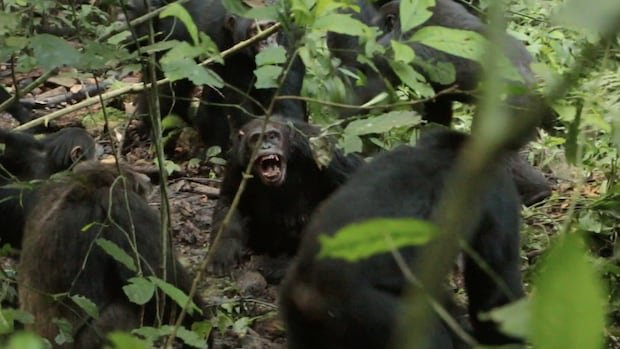
A recent study published in the journal Science has shed light on a disturbing conflict that erupted within a community of approximately 200 chimpanzees in Uganda. This violent clash marked a stark departure from decades of peaceful coexistence among the primates.
Lead researcher Aaron Sandel, a primatologist from the University of Texas at Austin, witnessed the tragic event unfold, where a chimp named Erroll, whom he had known since its adolescence, was brutally attacked and killed by other members of the group. The study, which Sandel spearheaded, delves into the origins and escalation of this ongoing “civil war” among the chimpanzees in Ngogo, a region within Uganda’s Kibale National Park.
The Ngogo chimps, known for their cooperative nature and successful territorial defense strategies, experienced a dramatic shift in dynamics between the western and central factions of the group back in 2015. This pivotal moment marked the beginning of a rift that eventually led to violent confrontations and casualties, including the deaths of numerous individuals, including infants, over the following years.
According to primatologist Iulia Bădescu, who has conducted research on these chimpanzees, the level of violence witnessed within this community is particularly striking due to the close familial relationships that had existed prior to the conflict. The sudden transformation of comrades into adversaries, resulting in lethal outcomes, has left researchers puzzled and concerned about the underlying causes driving such aggression.
While the exact triggers for this internal strife remain unclear, researchers speculate that factors such as group size, competition for resources, and shifts in social dynamics may have played significant roles in fueling the conflict. The breakdown of established hierarchies and the loss of key members within the group are also believed to have contributed to the escalating tensions and violent encounters witnessed among the chimpanzees.
Despite the distressing nature of these events, researchers like John Mitani, a primate behavioral ecologist involved in the study, emphasize the potential lessons that can be gleaned from observing chimpanzee behavior. While conflicts are not uncommon in the animal kingdom, the ability of these primates to reconcile after disputes highlights the importance of interpersonal relationships and conflict resolution mechanisms, traits that humans can learn from to promote peace and cooperation in their own societies.
As researchers continue to monitor and analyze the unfolding dynamics within this chimpanzee community, the hope remains that insights gained from studying these primate interactions will offer valuable perspectives on conflict resolution and cooperation, both in the animal world and in human societies.