
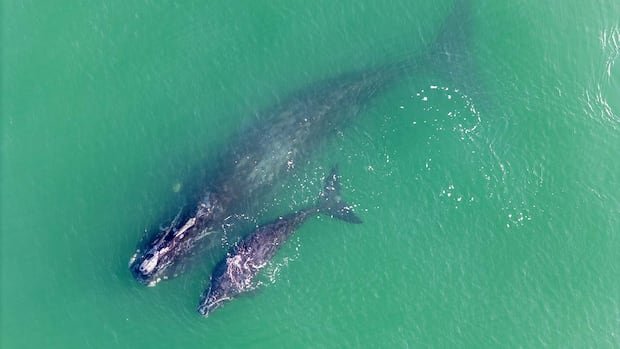
North Atlantic right whale experts on both sides of the border are expressing cautious optimism following an increase in the number of new calves born this year. The calving season from November to April off the southeastern U.S. saw the birth of twenty-three calves, marking the highest count recorded since 2009, which has been met with hope by Amy Warren, a scientific program officer at the New England Aquarium’s Anderson Cabot Center for Ocean Life.
The critically endangered North Atlantic right whales, with only 380 remaining worldwide as per the latest official estimate from 2024, have faced a decline in calving rates over the past decade. While historically 20 new calves were born annually, this figure has reduced to around 10 to 15 in recent years, with no known calf births in 2018.
Factors contributing to the recent increase in calf numbers remain unclear, although the health of the mothers, particularly their food intake, plays a vital role. The whales feed on specific plankton species, but the impact of climate change has shifted their food sources further north, leaving them without sustenance during calving, nursing, and migration to their feeding areas.
Environmental stressors such as ocean noise, ship traffic, vessel collisions, and entanglements in fishing gear also pose risks to the whales’ health. Conservation efforts, including fishery closures and speed limits for marine vessels, have been implemented in Canadian and U.S. waters to safeguard the North Atlantic right whales.
The positive news extends beyond the increased calf count, as some mothers have shown shorter intervals between births, indicating improved reproductive health. This year’s calving season witnessed whales with reduced time gaps between offspring, a promising sign for researchers.
The significance of the 23 new calves is not overlooked, although it underscores the ongoing challenge of rebuilding a population that once numbered in the thousands. Delphine Durette-Morin from the Canadian Whale Institute views the recent baby boom as a positive development but notes that sustained birth rates of around 50 calves annually are needed to reverse the species’ population decline.
Additionally, the whales’ movement into Canadian waters, with sightings in the Gulf of St. Lawrence for the first time this year, adds to the excitement among researchers. The hope is to observe and monitor these new calves as part of ongoing efforts to protect and conserve the North Atlantic right whale population.