
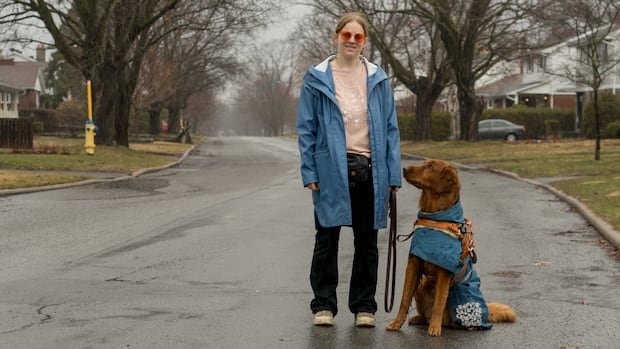
Every time I step into the supermarket, I am greeted by bright lights, bustling aisles, and a feeling of urgency to quickly navigate the overwhelming environment due to my disabilities, which often trigger panic attacks and dizziness. Accompanied by my service dog, Geneva, sporting a mobility harness marked with “service dog” and “do not distract,” I find comfort in his presence while I shop for my necessities.
Despite my clear indication that Geneva is working, people often approach us wanting to pet him. While I politely request them not to distract him, I continue with my shopping, relying on my noise-canceling headphones playing soothing music to help me navigate the surroundings.
However, not all interactions go smoothly. In a recent incident at a grocery store, a stranger disregarded my request and attempted to pet Geneva. When I stood up after picking an item, I was startled to find the same person standing too close, expressing anger at my refusal. Feeling cornered and frightened, I repeatedly asked her to leave until she finally walked away.
Shaken by the encounter, I sought solace in a quiet corner, sitting on the floor with Geneva providing pressure therapy to calm my escalating panic attack. It took half an hour before I felt composed enough to continue shopping, wary of encountering the woman again.
While negative encounters are distressing, positive interactions can make a significant difference. Following the unpleasant incident, a compassionate store employee offered me a water bottle, providing a stark contrast to the earlier confrontation.
My service dog, Geneva, has been a transformative presence in my life, enabling me to overcome fears of public spaces and find a newfound sense of independence. However, disruptions caused by well-meaning but uninformed individuals can not only trigger panic attacks but also jeopardize Geneva’s training, hindering his ability to assist me effectively.
To ensure the well-being of service dogs and their handlers, it is crucial for the public to respect their working status. Refraining from petting or distracting service dogs, and instead, acknowledging their handlers directly, demonstrates understanding and support for their essential role.
Negative interactions underscore the challenges faced by individuals with service dogs, emphasizing the need for awareness and respect in public settings. By upholding boundaries and recognizing the importance of service dogs in enhancing independence and well-being, we can create a more inclusive and supportive environment for all.