
Neanderthal from Siberia Shows Early Dental Surgery Evidence
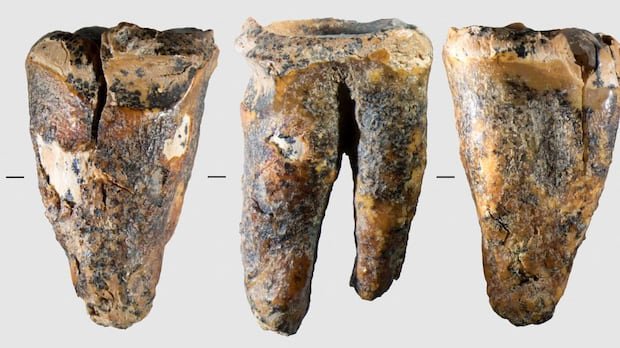
Around 59,000 years ago, a Neanderthal in Siberia faced a severe toothache and took action. Recent findings reveal a lower molar in a cave near the Altai Mountains exhibiting signs of dental work – a large hole seemingly drilled with a stone tool to remove decay.
As detailed in a study published in PLOS One, this marks the earliest known case of invasive dental surgery, predating Homo sapiens’ first recorded cavity treatment. These discoveries challenge the perception of Neanderthals as less sophisticated than modern humans.
Anthropologist John Olsen, a study co-author, considers two scenarios for the dental intervention. He suggests the Neanderthal either sought external help due to excruciating pain or attempted self-treatment by drilling into the tooth.
While the idea of Neanderthal dentists is questionable, researchers believe the procedure was skillfully executed, implying a certain level of expertise. The tooth, belonging to an adult of unspecified gender, was found at Chagyrskaya Cave in Russia.
Analysis under high magnification revealed deliberate modifications on the tooth surface, affirming intentional dental work. Experimental drilling on modern human teeth replicated the same hole shape and microscopic patterns observed in the Neanderthal tooth.
The study’s senior author, Kseniya Kolobova, emphasizes the Neanderthals’ cognitive abilities in planning and executing precise medical strategies. This challenges the conventional belief that such complex behaviors were exclusive to modern humans.
Although not definitively categorized as dental surgery, the study contributes to a growing body of evidence showcasing early healthcare practices among ancient human species. Neanderthals, who interbred with Homo sapiens before their extinction approximately 40,000 years ago, have been increasingly recognized for their advanced capabilities, including art creation, tool crafting, and medical care.
Olsen highlights the significance of communication skills in the Neanderthals’ medical procedures, emphasizing the complexity of conveying the benefits of enduring short-term pain for long-term relief. This challenges stereotypical views of Neanderthals as primitive beings and underscores their potential for sophisticated interactions.
The study sheds light on Neanderthals’ advanced cognitive abilities and medical practices, revealing a more intricate understanding of their capabilities beyond traditional portrayals.