
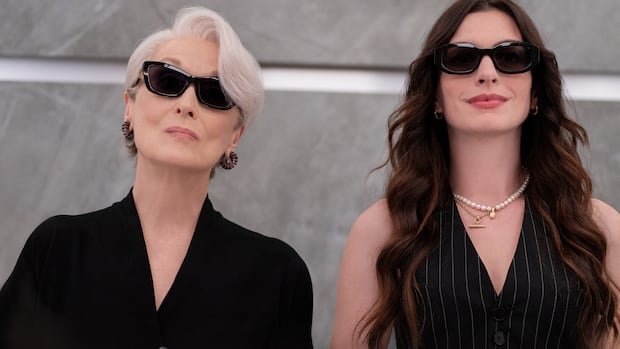
Midway through the sequel to “The Devil Wears Prada,” Meryl Streep’s character Miranda Priestly finds herself in an unexpected situation of being lectured, a scenario that would have been unimaginable in the original film two decades ago. The narrative in “The Devil Wears Prada 2” highlights the challenges faced by the fashion industry, with themes revolving around the decline of journalism, shifting consumer preferences, and the uncertain future of traditional magazines like Runway.
One of the central conflicts arises when tech billionaire Benji Barnes confronts Priestly, painting a bleak picture of a future where artificial intelligence could potentially replace all human elements in the production of Runway, including articles and models. This clash of perspectives symbolizes the clash between tradition and innovation in the fashion world.
The storyline continues to follow Anne Hathaway’s character, Andy Sachs, now an established journalist facing professional setbacks and forced to return to Runway. The film also brings back familiar faces like Stanley Tucci’s Nigel and Emily Blunt’s Emily, who add depth and humor to the narrative.
As the plot unfolds, Runway faces a crisis of reputation following an exposé, leading to the hiring of Andy for damage control. The movie cleverly incorporates nostalgic moments and references from the original film, appealing to fans of the franchise.
However, while the sequel maintains the glamour and drama of its predecessor, it falls short in terms of character development and thematic depth. The focus on superficial aspects of the fashion industry rather than exploring meaningful narratives weakens the film’s impact. Despite its entertaining moments and stylish visuals, “The Devil Wears Prada 2” struggles to match the emotional resonance and cultural commentary that made the original movie memorable.