
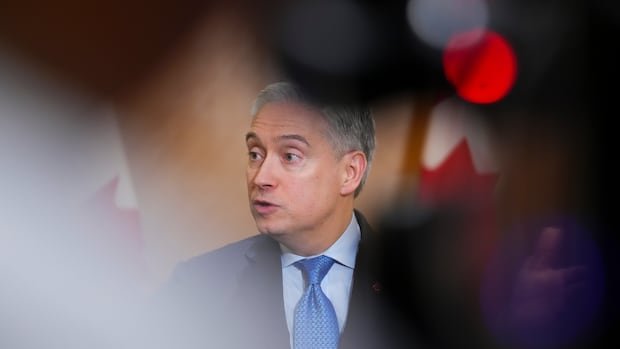
Finance Minister François-Philippe Champagne stated that Canada has no intentions of paying the $1 billion US fee for a permanent spot on U.S. President Donald Trump’s “Board of Peace,” which will supervise the governance and rebuilding of Gaza. Champagne emphasized that while there are still many details to be ironed out, Canada will not be contributing financially to join the board. This announcement follows Prime Minister Mark Carney’s acceptance of the invitation to join the board, highlighting that Canada’s final decision will be based on thorough information and assessment of the terms and operations of the board.
The board, to be led by Trump for life, has a structure where member states serve three-year terms unless they pay the hefty $1 billion US fee for permanent membership. The White House has offered permanent membership to partner countries showcasing a strong dedication to peace, security, and prosperity. Carney emphasized the importance of direct aid to Palestinians in Gaza rather than financial contributions to secure a permanent seat.
Carney reiterated Canada’s focus on providing impactful humanitarian aid and stressed the need for unobstructed aid channels into Gaza. While discussions around the board’s operations continue, the emphasis remains on improving the welfare of the Palestinian people in Gaza through direct assistance. The real operational work in Gaza will be overseen by a team of 15 Palestinian technocrats, independently selected and screened by Israel’s Mossad intelligence agency, to manage day-to-day activities previously handled by the Hamas government.
Several world leaders, including the UAE and Hungary, have shown interest in joining the board, with the UAE becoming one of the first countries to formally endorse the initiative. However, some countries have expressed concerns about the board potentially undermining the United Nations’ authority in conflict resolution efforts beyond Gaza. As the details of the board’s charter and implications are still being finalized, many governments are cautious and evaluating the potential impact on international diplomacy and conflict resolution initiatives.