
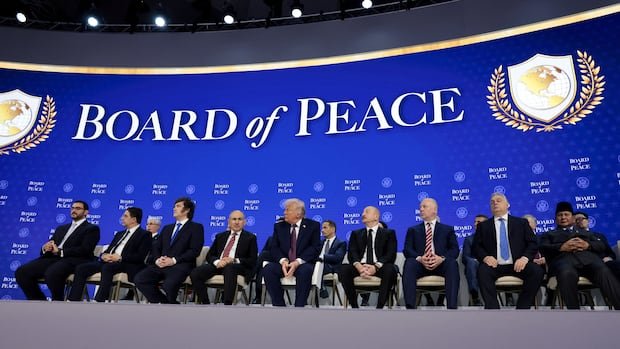
Donald Trump has introduced a new initiative called the “Board of Peace,” which has drawn comparisons to a fictional agency tasked with bringing peace to global conflict zones. The board operates under a unique set of rules set by the U.S. president, who has the authority to appoint members and make decisions regarding its operation.
Membership on the board is by invitation only, with countries required to pay $1 billion for a permanent seat or serve three-year terms. Trump, serving as the chairman for life, has already demonstrated his authority by revoking invitations, such as in the case of Prime Minister Mark Carney.
Approximately 30 countries have joined the board, with critics suggesting it is an attempt by Trump to establish an alternative to the United Nations. This move has raised concerns about the U.S.’s diminishing respect for international institutions established post-World War II.
Although Trump has stated that the Board of Peace will work alongside the UN, doubts remain about its effectiveness and relevance beyond the Middle East region. The board’s charter, leaked details reveal, does not specifically mention Gaza, despite its involvement in the ceasefire efforts there.
Notably, only two European Union countries, Bulgaria and Hungary, have signed on to the board, while others have expressed reservations due to concerns about undermining the authority of the UN. Despite criticisms and uncertainties surrounding the board, its endorsement by a UN resolution has lent it some legitimacy and influence in addressing global conflicts.
The initiative’s impact on the UN’s role in international affairs remains a point of contention, with some viewing it as a potential challenge to the existing global order. However, the UN’s enduring authority, backed by powerful member states like China, Brazil, and India, suggests that the U.S.’s influence may face resistance in reshaping global governance structures.