
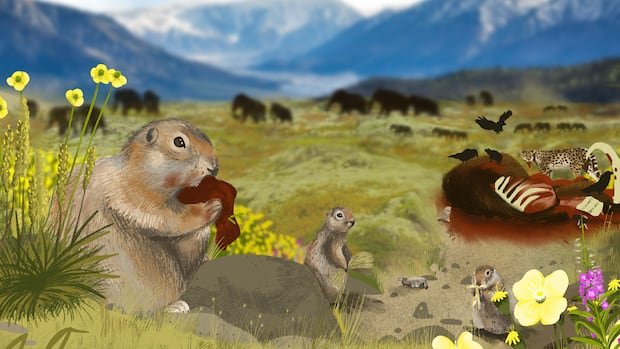
In the Canadian Arctic, scientists have successfully reconstructed the genetic codes of woolly mammoths, horses, steppe bison, and ground squirrels from the last ice age by analyzing DNA extracted from frozen squirrel excrement discovered in the Yukon region. The fecal samples, rich in genetic material, contained DNA from a variety of animals, including wolves, mammoths, horses, birds, bats, and even parasitic worms, along with approximately 200 plant species such as sages and sedges. This groundbreaking research, published in Nature Communications, sheds light on the intricate food web of the ancient Arctic ecosystem, where small rodents like ground squirrels preyed on megafauna.
Lead author Tyler Murchie, a scientist at the Hakai Institute in Campbell River, B.C., expressed astonishment at the comprehensive snapshot of the prehistoric ecosystem captured through the analysis of the coprolites. The DNA analysis not only unveiled a diverse array of organisms but also highlighted the Arctic ground squirrels’ pivotal role as inadvertent preservers of ancient genetic records. These squirrels, known for their broad dietary preferences, amassed a wide range of food items in their burrows, including remnants of mammoths and horses, reflecting their opportunistic feeding habits.
The study revealed that Arctic ground squirrels have been essential contributors to Arctic ecosystems for thousands of years, with their ancient counterparts likely representing distinct species or populations compared to present-day Yukon squirrels. The coprolites analyzed date back up to 700,000 years, originating from species exclusive to regions like China, Kazakhstan, Mongolia, and Siberia today. The findings underscore the stability of plant and animal compositions in the dry mammoth steppe grasslands of eastern Beringia over the Pleistocene epoch, contrasting with the current boreal forest ecosystem in the area.
Moreover, researchers emphasized the urgency in studying past ecological adaptations to climatic fluctuations to anticipate the impacts of modern climate change on Arctic wildlife. However, the rapid thawing of permafrost sites, including those where ancient squirrel feces were collected, poses a threat to preserving invaluable records of past ecosystems. As these invaluable archives face the risk of irreparable loss due to changing environmental conditions, scientists are racing against time to extract and decipher the wealth of information stored in these remarkable artifacts.