
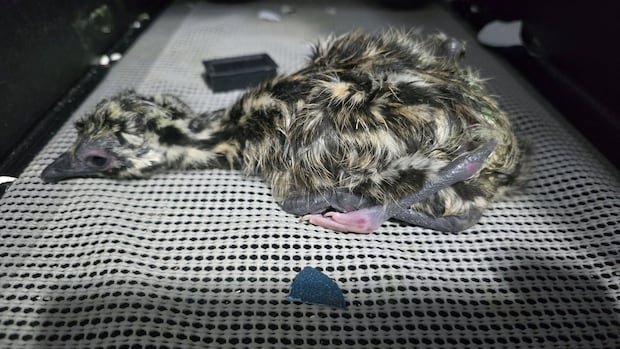
An unusual case unfolded at a farm in Nanaimo, B.C., where an emu with four legs hatched over the weekend, sparking curiosity among the owners and veterinarians. Celina Knuff, a co-owner of Back to Nature Acres Farm, expressed surprise at the rare occurrence on their 21-acre blueberry farm, which is also home to various livestock. Knuff mentioned that while they had successfully hatched 11 chicks this year without any complications, this unique emu hatchling raised unprecedented questions.
The emu chick, born through incubation, emerged unassisted and appeared alert and content. However, it had not yet stood up or passed waste, indicating potential internal challenges that could affect its survival. Despite these concerns, Knuff remained hopeful and vigilant, monitoring the chick’s progress closely.
Notably, one of the chick’s feet was observed to be curled, prompting Knuff to provide supportive care by massaging the foot and applying bandages to aid in straightening it. Despite the physical anomalies, the emu chick exhibited liveliness, keeping Knuff optimistic about its well-being.
Seeking expert advice, Knuff reached out to a veterinarian in Washington state for potential assistance, including the option of removing the extra legs if deemed necessary for the chick’s health. Dr. Tyler Stitt, from Winchelsea Veterinary Services in Nanaimo, described this case as unprecedented in his veterinary experience, emphasizing its uniqueness and complexity.
Exploring the potential causes behind the emu chick’s condition, Stitt highlighted factors such as incubation temperature irregularities, environmental pollutants, inbreeding, or absorption of a possible twin as contributing factors. The concern over the chick’s inability to defecate raised serious viability issues, with Stitt acknowledging the critical nature of this physiological function for its survival.
Looking ahead, Knuff planned to transfer the emu chick to a rescue organization with the necessary resources and expertise to provide ongoing care. With the blueberry farm gearing up for harvest and their upcoming relocation to Nova Scotia, Knuff considered it impractical to personally manage the chick’s specialized needs, emphasizing the importance of securing its best chances for long-term survival through dedicated rescue support.