
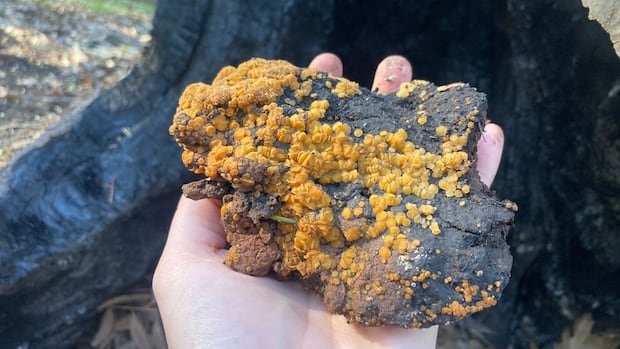
Fire-loving fungi play a crucial role in stabilizing soil after wildfires, according to experts. These fungi, known as pyronema, are among the first responders to a fire-ravaged area. They release spores that resemble smoke, helping to colonize and rejuvenate the scorched landscape.
Researchers have observed that these fungi remain dormant until triggered by a wildfire, adapting to extreme heat conditions. With the increasing size and intensity of wildfires due to climate change, understanding the post-fire environment, including soil and fungi, has become essential.
Pyrophilous fungi help in fire recovery by consuming ash, carbon, and other harmful byproducts of wildfires, converting them into spores and fruiting bodies. These serve as food sources for secondary responders like insects, mites, and bacteria, kickstarting the ecosystem’s recovery process.
Additionally, these fungi aid in preventing erosion and stabilizing soil structure post-fire. By breaking down harmful pollutants, including carcinogenic compounds, they contribute to soil health and plant regeneration. Research has shown a correlation between fungal and plant community recovery after wildfires, highlighting the interconnectedness of these organisms in ecosystem rehabilitation.
Furthermore, there is potential for utilizing fire-loving fungi in industrial applications, given their ability to break down pollutants. While the manipulation of these fungi for forest recovery remains untested, prescribed burns may enhance their effectiveness in responding to future wildfires.
Overall, the study of fire-loving fungi sheds light on their vital role in post-fire environments and their potential applications in ecosystem restoration and industrial settings.