
The upcoming week is anticipated to have significant implications for the Canadian economy. The deadline for renewing the Canada-U.S.-Mexico Agreement is expected to pass on Wednesday amidst widespread analysis and critique. Preceding this event, the latest GDP data for April will be released on Tuesday.
The Canadian economy has been grappling with challenges, having faced consecutive quarters of economic decline at the end of last year and the beginning of this year, sparking debates about the possibility of a technical recession. It is evident that the economy was already fragile prior to the impact of the trade war initiated by U.S. President Donald Trump, which further exacerbated its weaknesses, resulting in no growth over the past year.
Despite the bleak economic outlook, there is a glimmer of hope as preliminary information suggests a 0.4% increase in real GDP for April. While this may seem modest, consistent monthly growth at this rate would signify strong economic performance. Such growth levels have only been achieved six times since the summer of 2022.
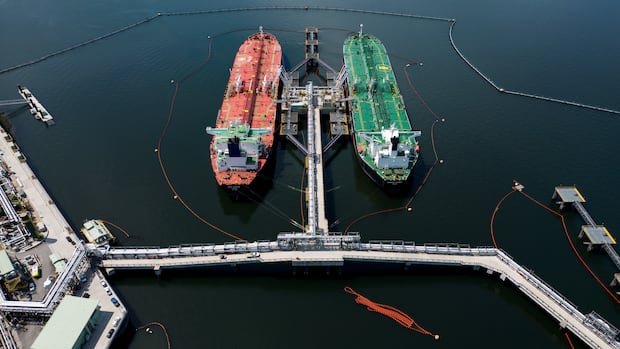
Notably, RBC economists Nathan Janzen and Claire Fan highlight a potential boost in non-conventional oil extraction and oil drilling activities, alongside an expansion in manufacturing GDP, indicating an overall growth in goods-producing sectors by one percent.
However, caution is advised as recent data releases have been subject to significant revisions. Economists were surprised by the contraction reported in the last GDP release, emphasizing the volatility of these figures. The unreliability of monthly GDP as an economic indicator post-pandemic has been flagged by experts, raising concerns about the accuracy and usefulness of economic data series.
As the upcoming GDP numbers are eagerly awaited, they hold substantial importance in shaping the ongoing discussions around the CUSMA renewal deadline. Anticipated to show a rebound from the prolonged period of negative growth, these figures are likely to introduce new revisions that could alter previous assessments and redefine perceptions of the current economic conditions.