
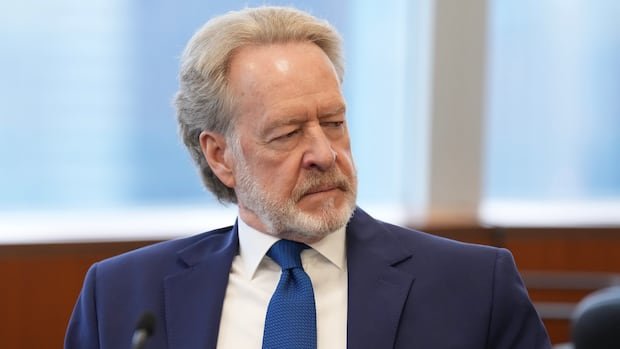
Canada’s former top trade negotiator mentioned on Monday that a tariff agreement between Ottawa and Washington is unlikely to be reached before the U.S. midterm elections. Steve Verheul, speaking to a virtual business audience, suggested that there might be a chance for a deal if President Donald Trump and his team seek a political victory before the fall elections. However, Verheul believes it is more probable that discussions will extend past the midterms and potentially into the following year.
Verheul, who led Canada’s negotiations during the NAFTA renewal under Trump’s first term, currently works at the public affairs firm GT & Co. He shared his insights during an event for Bank of Montreal clients focusing on the trade forecast leading up to July 1, the start of the review of the Canada-U.S.-Mexico Agreement (CUSMA).
While Canada and Mexico have expressed interest in extending CUSMA beyond 2036 for another 16 years, the U.S. might opt for rolling annual reviews. Trump retains the option to exit the agreement with a six-month notice period. Prime Minister Mark Carney acknowledged Trump’s lack of enthusiasm for CUSMA but highlighted specific sectors where Canada is urging collaboration with the U.S.
BMO’s chief economist, Doug Porter, expressed skepticism about the U.S. scrapping the agreement, emphasizing the minimal economic growth due to U.S. tariffs impacting Canadian exports. Despite this, Porter does not believe Canada is heading into a recession. BMO’s economic projection anticipates sluggish growth in 2026 before a rebound in 2027, assuming the U.S. maintains its current tariff strategy.
Verheul noted that while Trump has raised the possibility of withdrawing from CUSMA, there is substantial backing within the U.S. from the public, businesses, senators, and Congress for renewing the trade deal. He highlighted that CUSMA continues to shield most Canadian exports from U.S. tariffs, indicating the U.S.’s interest in upholding the agreement.
Verheul stressed the need for Canada to address high U.S. sector-specific tariffs on steel, aluminum, automobiles, and other goods. He expressed doubts about the viability of the tariff agreements struck by other countries with Trump, suggesting that these deals may not endure due to their perceived lack of solidity.