
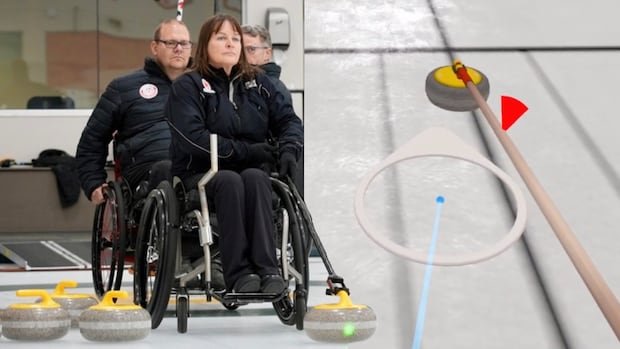
With less than two months to go before the 2026 Paralympic Games begin in Italy, the Canadian wheelchair curling team is diligently preparing for the competition. This year, they are utilizing a virtual reality program created in Alberta to enhance their training and performance.
The innovative program, developed at Red Deer Polytechnic, allows seated users to visualize themselves in the virtual simulation, providing a unique training experience. Jennifer Dornstauder, the project’s engineering technical lead, highlighted the program’s ability to eliminate training constraints and enhance focus on strategic elements by removing physical barriers.
Canada’s wheelchair curling team has a remarkable track record of podium finishes at previous Paralympic Games, attributing part of their success to embracing innovation. The sport, often referred to as “chess on ice,” requires meticulous strategy due to the absence of sweeping.
Dana Ferguson, the national program’s mixed doubles coach, emphasized the importance of technology in making precise shots and praised the VR program for facilitating remote training collaboration among team members across the country.
The virtual simulation, designed to replicate the competition arena using imagery from Curling Canada, aims to familiarize athletes with the environment and optimize mental preparation. Collinda Joseph, a member of Canada’s Paralympic team, highlighted the program’s ability to provide a spatial visual representation of the arena, aiding in mental readiness.
The use of VR in wheelchair curling reflects a culture of continuous improvement and openness to technological advancements within the sport. Athletes like Terry Fowler acknowledge the impact of data collection and analytics on tactical decisions, emphasizing the sport’s commitment to progress and excellence.
The development of the VR technology stemmed from a collaboration between Dornstauder and Curling Canada officials, leading to the creation of a unique online simulator named “Chess On Ice.” The specially designed VR software was completed within four months, posing challenges for the development team but ultimately enhancing the training experience for para-athletes.
Moving forward, the team aims to incorporate additional features like a heat map, multiplayer mode, and a working scoreboard into the software. There are hopes that the VR program will not only benefit current athletes but also attract new participants to wheelchair curling, offering a broader audience an immersive glimpse into the sport.
The integration of virtual reality technology in wheelchair curling signifies a progressive approach to training and competition preparation, setting the stage for enhanced performance and broader engagement within the sport.