
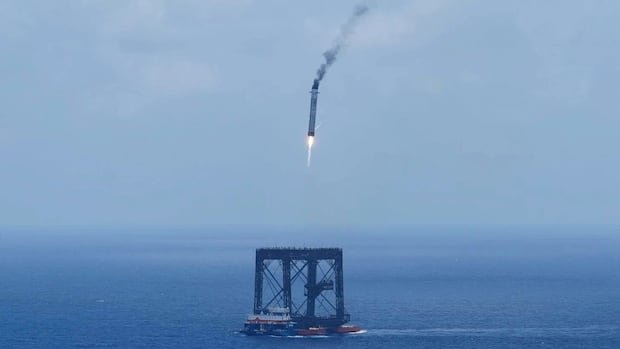
China achieved a significant milestone in its space program as it successfully recovered the first stage of a Long March-10B rocket after a recent launch, according to state media reports. This marked the first time China has managed to bring back the first stage of a rocket, following a similar practice by SpaceX and Blue Origin to cut launch costs by reusing boosters. SpaceX, led by Elon Musk, has conducted over 600 landings of its first-stage Falcon boosters, setting a new record with the recent 36th launch. Blue Origin, founded by Jeff Bezos, has also been recovering its rockets since 2015.
SpaceX has been pushing the boundaries further with its Starship rockets, planning to capture returning boosters using giant mechanical arms at the launch pad. Blue Origin, on the other hand, began by landing its New Shepard boosters in Texas and has expanded to recovering New Glenn boosters on a platform off the Florida coast.
With China now joining the trend of rocket recycling, Japan is set to follow suit with a launch and landing attempt in the upcoming weekend. The Long March rocket launch took place from Hainan Island, a popular tourist destination. According to Xinhua, the rocket’s reusable configuration can carry payloads of up to 16,000 kilograms into low Earth orbit. Comparatively, SpaceX’s Falcon 9 can handle 22,800 kilograms, while the Falcon Heavy can lift up to 63,800 kilograms to LEO. Blue Origin’s New Glenn rocket has a payload capacity of up to 45,000 kilograms.
Rocket Lab USA, a smaller player in the launch industry, also showcased successful recovery efforts in 2022 by capturing its first stage rocket with a helicopter before safely dropping it into the ocean.