
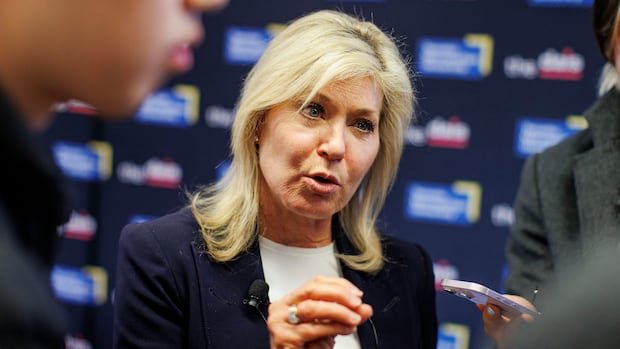
Bonnie Crombie has stepped down as the leader of the Ontario Liberal Party, following a lackluster leadership vote last fall. Initially planning to stay until a successor was chosen, Crombie has now opted for an early departure, stating that it is the opportune time for both her and the party to progress.
Expressing pride in the collective efforts to revitalize and rejuvenate the party, Crombie, a former mayor of Mississauga, Ontario, made the decision in September to resign after garnering only 57 percent support in the leadership vote at the party’s annual general meeting. Kathryn McGarry, the president of the Ontario Liberal Party, acknowledged Crombie’s pivotal role in reshaping the party and setting the stage for its future endeavors.
The party is set to appoint an interim leader shortly as it embarks on its leadership transition. Although the date for the leadership contest has not been confirmed, McGarry assured that an announcement would be made soon.
The news of Crombie’s resignation has spurred various potential successors to contemplate leadership bids. Liberal MP Nate Erskine-Smith, the runner-up in the 2023 leadership race, is actively preparing for a potential candidacy. Additionally, Ontario Liberal caucus members Lee Fairclough and Rob Cerjanec have expressed serious interest in joining the leadership race, while Ted Hsu, another caucus member, has ruled out running again. Former Liberal Party president Mike Crawley is reportedly contemplating a bid as well.
During her two-year tenure, Crombie led the provincial Liberals to official party status by securing 14 seats, up from nine in the previous election. Despite this achievement, Crombie failed to win her own seat in Mississauga, and the party fell short of becoming the Official Opposition despite receiving a significant number of votes.
John Fraser, the Liberal parliamentary leader at Queen’s Park, praised Crombie for elevating the party to official status, emphasizing the importance of having equal resources and representation in the legislature. Fraser highlighted the need for the next leader to be dedicated, well-traveled, and an effective communicator.
Crombie’s leadership journey faced some challenges, including early controversies and strategic pivots. Despite these hurdles, she emerged victorious in a competitive leadership convention, outperforming her contenders in three rounds of ballot counting. While Crombie considered participating in byelections, she ultimately focused on securing a seat in Peel Region, her home base. However, the party’s bid to win seats in the region, including Crombie’s, ended in disappointment during the 2025 election.
Overall, Crombie’s resignation marks a significant turning point for the Ontario Liberal Party, setting the stage for a new chapter in its leadership and direction.