
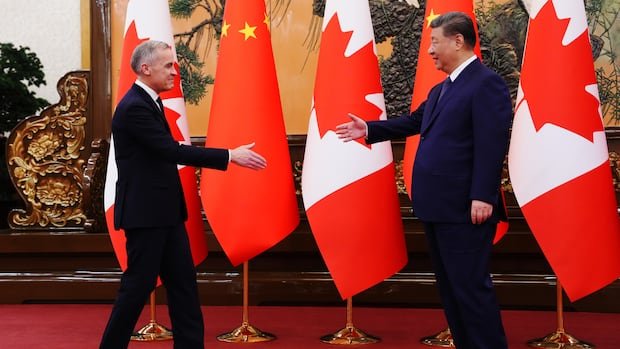
The Canadian government, under Prime Minister Mark Carney, has struck a deal with China to permit a significant number of Chinese electric vehicles into the Canadian market. In exchange, China will eliminate duties on canola products. This agreement, the first trade deal of Carney’s tenure, signifies a shift in relations with China from previous adversarial stances. Carney hailed the deal as a pivotal step toward removing trade barriers and reducing tariffs, forming part of a broader strategic partnership with China. The agreement includes a commitment from Beijing to reduce canola seed duties to 15% by March, a move described by Carney as significant progress.
Saskatchewan Premier Scott Moe lauded the breakthrough on canola tariffs, emphasizing the importance of collaborative efforts between federal and provincial governments to enhance trade relationships. As part of the deal, Canadian canola meal, lobsters, crabs, and peas will no longer face Chinese anti-discrimination tariffs until the end of the year. Conversely, Canada will allow up to 49,000 Chinese electric vehicles annually into the Canadian market at a 6.1% tariff, marking a contrast to the previous 100% tariffs imposed by Canada in 2024. Carney noted that this adjustment would make some electric vehicles more affordable for Canadian consumers, constituting only about three percent of the domestic market.
Ontario Premier Doug Ford criticized the deal for potentially disadvantaging Canadian workers by granting China greater access to the Canadian market without ensuring reciprocal investments in Canada’s economy or auto sector. Ford urged Carney to balance the agreement by supporting Ontario’s auto industry through measures like ending the electric vehicle mandate and aligning regulations with key trading partners.
Carney emphasized that the deal with China aims to foster a modern Canadian auto industry focused on technological innovation and affordability. He underscored the potential for Chinese investment in Canada’s vehicle production, highlighting the pact’s significance in paving the way for future collaborations. The agreement follows Carney’s recent meeting with Chinese President Xi Jinping, signaling a resolution to years of trade tensions that began with tariffs imposed by the previous government to safeguard Canada’s auto sector.
The thaw in Canada-China relations through this trade deal aligns with the Canadian government’s goals to boost exports and diversify trade partners, including a 50% increase in exports to China by 2030. Carney reiterated Canada’s commitment to human rights and democracy in discussions with Xi, advocating for a pragmatic approach that acknowledges the realities of international relations. The evolving relationship between Canada and China, characterized by predictability and effectiveness, contrasts with the complexities of Canada’s ties with the United States.
In response to the deal, U.S. President Donald Trump viewed the agreement positively, emphasizing the importance of securing trade deals. The recent developments mark a shift in the frosty relations between Canada and China, indicating a new era of cooperation, particularly in the trade sector. As Canada seeks to navigate evolving global dynamics, the agreement with China signifies a strategic step towards strengthening economic ties and fostering mutual benefits.