
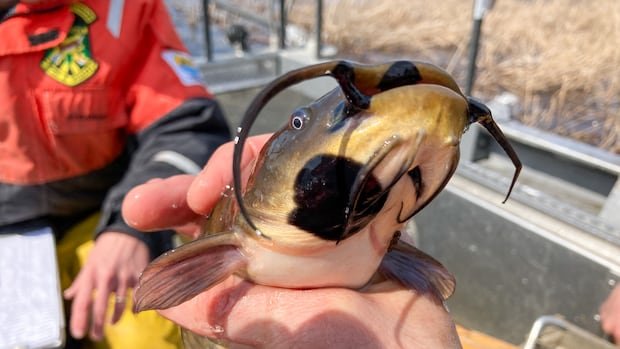
A recent genetic study suggests an unusual phenomenon of cancerous tumours spreading among catfish in Quebec and the northeastern U.S. This discovery marks the first case of transmissible cancer in fish and is among the few instances ever documented, as per findings published in the journal Nature.
Julie Dragon, a key researcher in the study, highlighted that only a handful of transmissible cancers have been observed previously, notably in Tasmanian devils, dogs, and shellfish. The rarity of such occurrences in nature raises questions about the conditions enabling this phenomenon.
The appearance of melanoma skin cancer tumours in brown bullhead catfish in Lake Memphremagog, reported by anglers in 2012, sparked concerns. Subsequently, a significant portion of the catfish population in the lake developed these tumours, with varying impacts on their health, including spreading to vital organs like the brain and liver.
Following the emergence of the black lesions post a major flood caused by storm Irene, speculations arose about potential carcinogens in the lake. While tests for carcinogens yielded inconclusive results, a study indicated elevated levels of certain metals and arsenic in fish with tumours.
In response, Julie Dragon, an associate professor at the University of Vermont, investigated the possibility of a viral cause for the tumours in 2014. Genetic testing revealed diverse genetics among the fish but uncovered a surprising similarity among the cancer cells, distinct from the host fish.
The ease with which the tumours shed cells has led to speculations about potential transmission mechanisms, with one theory suggesting transmission during spawning. Despite the absence of direct evidence of tumour transmission among fish, ongoing research aims to validate this possibility.
While some researchers remain cautious about labeling it as a transmissible cancer, citing the lack of direct transmission evidence, others find the genetic evidence compelling. Efforts to assess additional potential contaminants and monitor infected fish continue to shed light on this unique cancer phenomenon among catfish populations in various lakes.