
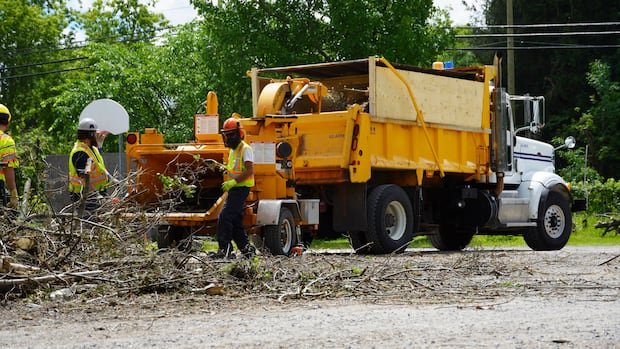
The city council of Ottawa has recently approved a pilot program aimed at enhancing communities’ resilience to extreme weather events. This initiative will provide funding to local community organizations to assist residents before, during, and after meteorological emergencies like derechos, tornadoes, and floods.
The approved $1 million pilot program allows organizations to apply for grants of up to $50,000 to develop emergency plans and acquire essential equipment such as mobile generators, flashlights, and power banks. Eligible applicants include community associations, faith-based groups, and other non-governmental organizations.
The proposal for this program was put forth by Nichole Hoover-Bienasz, the city’s director of climate change and resiliency services, in response to the escalating frequency of extreme weather incidents, which are projected to increase in the future. Following the destructive derecho that struck Ottawa in 2022 with winds reaching up to 190 km/h, the city initiated efforts to promote neighborhood-level preparedness for natural disasters.
Angela Keller-Herzog, the executive director of the advocacy group Community Action for Environmental Sustainability (CAFES), highlighted the significance of the program in addressing gaps in local emergency planning. A city survey revealed that less than one-third of 72 community organizations had established community emergency plans, with priorities identified as training, planning, coordination, public education, and ensuring communication and power continuity during outages.
John Crump, president of the Glebe Community Association, expressed support for the new initiative, emphasizing the need for proactive steps towards climate change adaptation. Don Kelly, director of safety at the Blackburn Hamlet Community Association, endorsed the program but raised concerns about logistical challenges such as equipment storage and management, particularly in volunteer-dependent communities.
Overall, the pilot program aims to empower communities to better prepare for and respond to extreme weather events, fostering grassroots emergency preparedness and enhancing local resilience.