
As the Olympic Winter Games approach, Cortina d’Ampezzo is gearing up to welcome thousands of athletes and millions of viewers. However, a recent analysis by U.S.-based non-profit Climate Central reveals a significant increase in average temperatures compared to 70 years ago when the town last hosted the event.
Between the period after the 1956 Winter Games and the years from 2016 to 2025, February temperatures in Cortina have risen from around –7 C to –2.7 C. This warming trend, as noted by Kristina Dahl, Vice President for Science at Climate Central, signifies a notable shift that can impact the difference between freezing and thawing temperatures.
Utilizing a global temperature dataset dating back to the 1940s, Climate Central also discovered a reduction of 41 days per year in Cortina experiencing temperatures below freezing compared to the past. This shift is crucial to maintaining the ideal cold and snowy conditions necessary for optimal athletic competition.
Furthermore, the report highlights changes in average temperatures for the Winter Paralympics over the last five decades. March temperatures in Cortina and Milan have increased by 2.5 C and 2.1 C, respectively, since 1976, indicating a warming trend that may affect future sporting events.
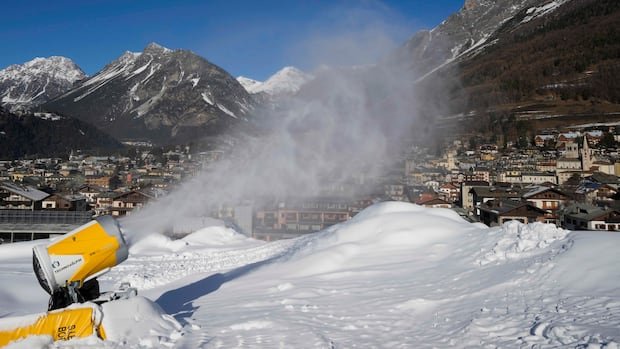
The impact of climate change, largely driven by fossil fuel consumption, is increasingly evident in outdoor events, necessitating a greater reliance on artificial snow. The safety and operational requirements, including the need for ample snow in competition and runoff areas, are becoming more challenging due to these shifting climate conditions.
While concerns were raised about the artificial snow requirements at the venue hosting freestyle skiing and snowboarding events in Livigno, recent colder temperatures in the region have helped alleviate some of these challenges. However, the reliability of snowpack remains essential, particularly in high-speed skiing segments like the Tofana Schuss, where athlete safety is paramount.
Looking ahead, the sustainability of future Winter Olympics is being questioned in light of climate change impacts. A 2024 study conducted by climate scientist Daniel Scott, in collaboration with the International Olympic Committee (IOC), evaluated potential host locations for the Winter Games, emphasizing the importance of sufficient snow accumulation and cold temperatures for maintaining competitive courses.
In a ‘middle of the road’ emissions scenario, around 50 locations are projected to remain viable for the Winter Games by 2050, while the Paralympics face greater challenges with only 22 locations deemed suitable. The evolving climate may necessitate changes in event venues and athlete training methods, potentially shifting certain competitions indoors and altering global training practices.
The evolving climate poses significant challenges for future winter sports events, highlighting the need for sustainable practices and adaptive strategies to ensure the continued success of cold-weather competitions.