
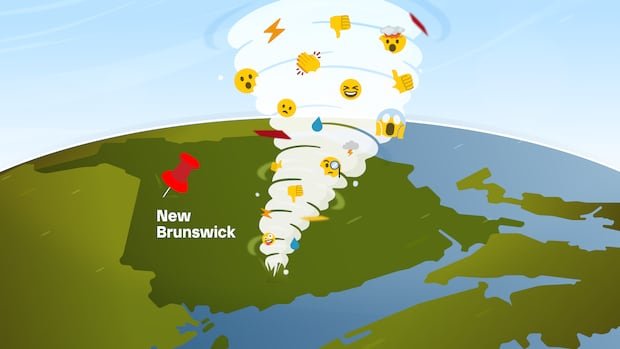
Environment Canada issued a severe thunderstorm watch for New Brunswick on July 14, indicating favorable conditions for thunderstorm development. The watch also mentioned a potential tornado risk. Despite no severe storms or tornadoes occurring, social media became flooded with misinformation and unreliable images, causing panic.
Psychology professor Sander van der Linden highlighted that events like extreme weather and health emergencies are breeding grounds for misinformation due to the urgency and uncertainty involved. It is crucial to differentiate between a “watch” and a “warning” from Environment Canada, with a watch advising preparation for severe weather and a warning indicating immediate action is necessary.
Meteorologist Jill Maepea clarified that the tornado risk was low, emphasizing the challenge of predicting convective weather, which can develop rapidly. Social media criticism arose regarding the timing of the storm notice, with misinterpretations leading to false claims of tornado warnings.
The aftermath saw continued social media uproar, with some sharing fake storm images. The rise of hyperrealistic AI has made it harder to discern real from fake images online, contributing to the spread of misinformation. Technology experts stress the importance of verifying sources and maintaining trust in official information during emergencies.
A proactive approach, known as “pre-bunking,” involves warning others about misinformation to promote a healthy information environment and community safety. It is crucial to combat fearmongering and misinformation to ensure accurate and reliable communication during public safety events.