
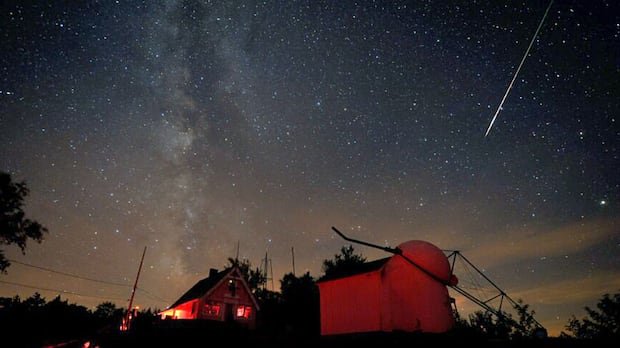
Every August marks the arrival of one of the most spectacular meteor showers of the year, the Perseids. This year, the peak of the Perseid meteor shower coincides with a partial solar eclipse, adding to the celestial show.
The Perseids are renowned for their abundance and brightness, making them a favorite among skywatchers. The peak viewing night is anticipated to be on Aug. 12-13, coinciding with a new moon, which means there will be optimal conditions for observing faint meteors without interference from moonlight.
Peter Brown, a Canada Research Chair in Meteor Astronomy at Western University in London, Ont., expressed excitement about the potential for Earth-grazers during this year’s shower. Earth-grazers are meteors that enter the atmosphere and then return to space, often appearing bright and fast, creating a spectacular display.
The shower is expected to peak around midnight Eastern Daylight Time, with a potential increase in the number of visible meteors per hour, possibly exceeding 120. However, actual visibility may vary depending on local sky conditions.
Meteor enthusiasts don’t have to wait for the peak night to witness the Perseids. The shower began on July 17, with the number of visible meteors gradually rising leading up to the peak. Checking the weather forecast is advisable, and observing on nights preceding the peak can also offer a rewarding experience.
For optimal meteor viewing, a clear and dark sky is essential. Avoiding light sources, including phone screens, can help your eyes adjust to the darkness, enhancing visibility of faint objects in the sky.
Apart from the Perseids, other major meteor showers, such as the southern delta Aquariids and the alpha Capricornids, are active, providing additional opportunities to witness shooting stars. Additionally, the partial solar eclipse on Aug. 12 will offer a glimpse of the moon partially obscuring the sun, visible in certain regions.
While the total solar eclipse won’t be visible from Canada, regions to the east may witness a partial eclipse. Safety precautions, including the use of approved solar eclipse glasses, are vital for observing this celestial event.
The convergence of the Perseid meteor shower and the partial solar eclipse promises a celestial spectacle, offering enthusiasts a unique opportunity to marvel at the wonders of the night sky.