
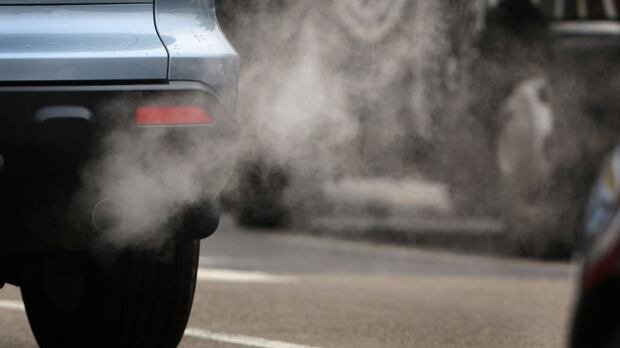
Prince Edward Island has seen a consistent decrease in its greenhouse gas emissions over three consecutive years, as indicated in a recent report. However, to achieve its target of reaching net-zero emissions by 2040, the province needs to focus on improving its transportation sector, noted Gilles Arsenault, the Minister of Environment, Energy, and Climate Action for P.E.I.
Arsenault highlighted that transportation remains a significant area of concern not only in P.E.I. but throughout the country, with a noticeable increase in traffic on the island in recent years. The 2025 National Inventory Report, utilizing data from 2023, revealed that P.E.I.’s total greenhouse gas emissions were 1.59 megatonnes that year, representing a nearly one percent reduction from the previous year.
Under the Net-zero Carbon Act, P.E.I. aims to lower emissions to below 1.2 megatonnes by 2030. Despite a population growth of almost 17 percent during the period of emissions decline, the province has managed to consistently reduce its overall emissions, credited in part to provincial initiatives like home insulation rebates and the heat pump program.
Arsenault emphasized the effectiveness of programs related to building improvements, particularly the province’s incentives for home insulation and heat pump installations. He noted the positive impact of integrating energy-efficient systems in both new and existing buildings across P.E.I.
Looking ahead, Arsenault announced the upcoming release of a new net-zero action plan that will outline the province’s strategies for the next five years, with a key focus on transportation initiatives. While programs such as the active transportation fund and “toonie transit” have shown success, the province is exploring additional measures like electric vehicle rebates and charging infrastructure to further reduce transportation-related emissions.
Amid P.E.I.’s push towards net-zero goals, challenges such as electricity shortages pose a “balancing act,” according to Arsenault. He mentioned the importance of maintaining a sustainable grid while striving for environmental protection, pointing out that the combustion turbine generators proposed by Maritime Electric are crucial for backup power and unlikely to hinder the province’s net-zero objectives significantly.
Arsenault stressed the ongoing need for public education and engagement to encourage sustainable practices and habits among Islanders. The Minister’s Report on Climate Change highlighted that the government allocated $266.6 million towards climate action initiatives across all departments in 2024-2025.