
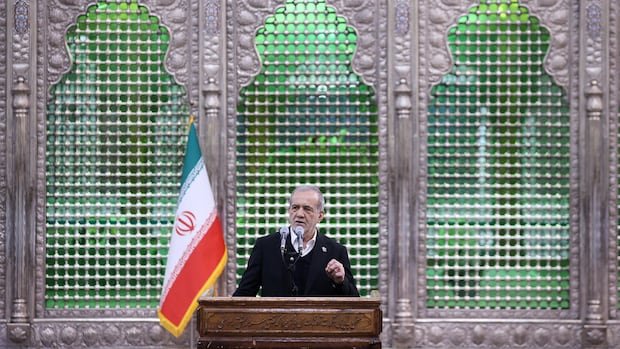
Iran’s president announced on Tuesday his directive to the foreign minister to engage in negotiations with the United States aimed at fairness and equity. This move signifies a shift for President Masoud Pezeshkian, who had previously expressed concerns about the escalating unrest in the country. The decision also indicates support from Iran’s Supreme Leader Ayatollah Ali Khamenei for talks that he had previously dismissed.
Efforts are underway, with Turkey facilitating potential talks later in the week while U.S. Mideast envoy Steve Witkoff is in the region. Foreign ministers from several countries have been invited to participate if the negotiations materialize.
However, the outcome of the discussions between Iran and the U.S. remains uncertain, given President Donald Trump’s inclusion of Iran’s nuclear program as a key demand. The recent order for the bombing of Iranian nuclear sites during a conflict in 2025 adds complexity to the situation.
In a statement, Pezeshkian mentioned that the decision to pursue negotiations was in response to requests from regional governments and the U.S. president. He emphasized the importance of a conducive environment free from threats and unreasonable expectations for productive discussions guided by principles of respect and practicality.
While the U.S. has not officially confirmed the talks, there have been reports indicating potential developments. The focus of the discussions is expected to center on nuclear issues, with the possibility of indirect talks initially leading to direct negotiations if progress is made.
Regarding the enrichment of uranium, a top Iranian security advisor dismissed the idea of Russia taking Iran’s enriched uranium, emphasizing Iran’s commitment to peaceful nuclear activities. Iran’s stance on nuclear weapons and the necessity for reciprocal actions from the other side were highlighted, with assurances that Iran does not seek to possess nuclear weapons.
The situation remains fluid, with various stakeholders involved in the diplomatic efforts. The discussions are critical for addressing nuclear concerns and regional stability, although challenges and differing viewpoints may complicate the negotiation process.