
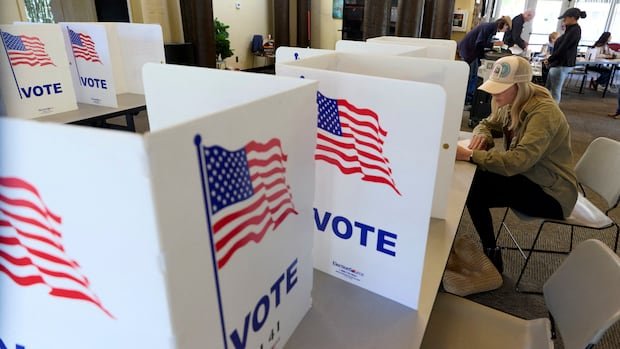
In a notable decision on Wednesday, the U.S. Supreme Court permitted California to implement a new congressional district map that could potentially grant Democrats five additional seats. This move is anticipated to enhance the Democratic Party’s prospects of seizing control of the U.S. House of Representatives from the current Republican administration led by President Donald Trump in the upcoming November midterm elections.
The Supreme Court rejected a plea from the California Republican Party to halt the utilization of the new electoral map, which was ratified by voters last year as a countermeasure to a similar initiative in Texas aimed at securing five more U.S. House seats for Republicans. Notably, the Texas redistricting plan was previously sanctioned by the Supreme Court in December.
The court’s decision, conveyed in a succinct statement, did not provide any detailed rationale, consistent with its customary approach for urgent matters. None of the justices publicly dissented from the ruling.
The legal challenge against the California map, spearheaded by the California Republican Party and other opponents, alleged that the state had improperly incorporated race considerations in redrawing its U.S. House district boundaries.
The ongoing dispute in California is part of a broader national confrontation over redistricting instigated by Trump’s call last year for Republican legislators to revise state congressional maps, commencing with Texas, in a bid to safeguard the party’s narrow majority in the U.S. House during the midterm elections.
California Governor Gavin Newsom, a Democrat, commented on the recent Supreme Court decision, attributing the origins of the redistricting conflicts to Trump’s ambitions for additional congressional seats in Texas. Newsom asserted that Trump initiated the redistricting battle and faced defeat, predicting a similar outcome in the November elections.
The shift in electoral district boundaries, known as redistricting, is a periodic process driven by updated census data. However, recent redistricting endeavors have been primarily motivated by partisan interests, a practice often referred to as partisan gerrymandering, which critics argue undermines democratic principles.
In January, a federal court in Los Angeles dismissed a lawsuit seeking to block California’s new map, contending that there was insufficient evidence to support claims of racial bias in the redistricting process. The court emphasized the prevalence of partisan motivations in contrast to weak racial considerations in the redrawing of electoral boundaries.
The Supreme Court’s decision to permit the Texas redistricting, despite objections from liberal justices, tacitly acknowledged the political underpinnings behind both Texas and California’s redistricting initiatives. Justice Samuel Alito, in a concurring opinion, affirmed that the primary driver behind the adoption of the redistricting maps in both states was the pursuit of partisan advantage.